Computed Tomography

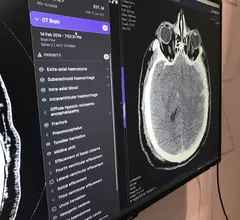
Computed tomography (CT) is a fast and accurate imaging modality often used in emergency settings and trauma imaging. CT scans, with or without (or both) iodinated contrast are frequently used to image the brain, chest, abdomen and pelvis, but also have post-imaging reconstructive capabilities for detailed orthopedic imaging. It is now a standard imaging modality in emergency rooms to quickly assess patients. CT uses a series of X-ray images shot as the gantry rotates around the patient. Computer technology assembles these into into a dataset volume than can be slices on any access, or advanced visualization software can extract specific parts of the anatomy for study. Find more content specific to cardiac CT.


Thumbnail

Disease-specific reporting templates improve completeness, but uptake remains limited

A new paper published in Clinical Imaging details the impact of a high-resolution CT reporting template catered specifically to interstitial lung disease.

kid child pediatric MRI imaging

New data highlight inconsistencies in imaging protocols for pediatric appendicitis

Utilization of MRI for cases of suspected appendicitis in the pediatric population is beneficial, yet its use varies across institutions.

Providers still routinely using unnecessary imaging to diagnose mild traumatic brain injury

There is little value in deploying CT, MRI or X-ray to diagnose mTBI, experts note, and it may instead result in harm and excess costs.

Thumbnail

No need for updated imaging prior to major surgery in some cases, new data show

Prior chest imaging can sometimes be just as predictive of adverse events after surgery as updated imaging, according to new data set to be presented at the annual conference of the American College of Cardiology on March 5. 

Dual source CT scanners shown to expedite treatment in emergency settings

Dual source CT scanners can eliminate the need for beta blockers to control heart rates during coronary CTA exams.  

liver cancer

Pelvic CT after liver cancer: Costs versus benefits

Should patients treated for hepatocellular carcinoma undergo regular follow-up pelvic CTs? Rising survival rates may change the calculus.

Thumbnail

MRI catches CT in head-to-head lung imaging

When it comes to assessing patients with suspected pulmonary embolism, contrast-enhanced CT pulmonary angiography has no diagnostic edge over a certain free-breathing, unenhanced MRI perfusion protocol.

Thumbnail

Including radiologists in radiotherapy prep bolsters quality of care

Many radiation oncologists are not formerly trained in imaging interpretation, and radiologists’ collaborative participation in care planning can help to catch errors, experts wrote recently.