Home

Cardiology Associations

This page includes news coverage of cardiology societies and associations. Follow these links for specific cardiology society news pages: American College of Cardiology (ACC), American Heart Association (AHA), American Society of Echocardiography (ASE),  American Society Nuclear Cardiology (ASNC), European Society of Cardiology (ESC), Heart Rhythm Society (HRS), Society for Cardiovascular Angiography Interventions (SCAI), Society of Cardiovascular Computed Tomography (SCCT), Transcatheter Cardiovascular Therapeutics (TCT), and Vascular Interventional Advances (VIVA). 

RSS icon

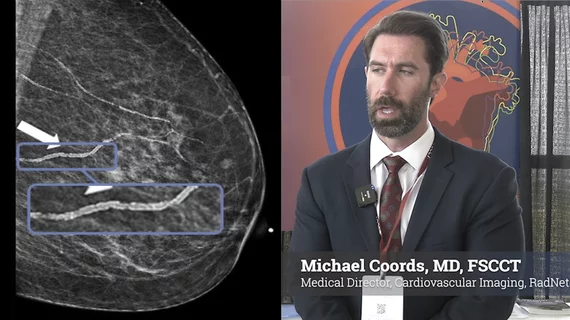
  • Michael Coords, MD, FSCCT, Medical Director of Cardiovascular Imaging, RadNet, a leader with the SCCT Health Policy and Practice Committee Regulatory Task Force, and incoming co-chair of the Health Policy and Practice Committee, says SCCT offers a unique blend of clinical education, business strategy, and networking to stay on top of CCTA's rapid proliferation.

    Radiologists: Take the deep dive into advanced cardiovascular CT at SCCT

    SCCT offers a unique blend of clinical education, business strategy, and networking to stay on top of CCTA's rapid proliferation.

  • Ronen Rubinshtein, MD, FACC, FESC, director, heart institute, Edith Wolfson Medical Center, in Holon, Israel, president elect for the Society of Cardiovascular Computed Tomography (SCCT), and chairman of the SCCT 2026 annual scientific meeting, explains plaque imaging, AI and structural heart disease are the spotlight at the meeting.

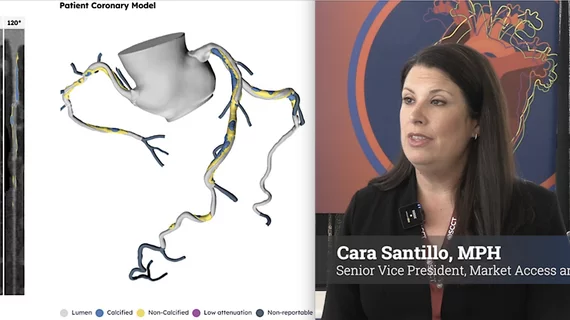
    Plaque imaging, AI and structural heart disease in the spotlight at SCCT 2026 meeting

    Coronary plaque imaging is an area many experts believe is driving a shift toward earlier detection and prevention of heart disease.

  • Robert Hawkins, MD, MSC, assistant professor of cardiac surgery, University of Michigan, discusses the growing trends of surgical aortic valve replacement (SAVR) following prior transcatheter aortic valve replacement (TAVR) and how to best risk assess these patients using a new STS risk calculator.

    How to evaluate risk when TAVR patients require surgery later in life

    Robert Hawkins, MD, discussed an updated risk calculator—and the latest data on SAVR after TAVR—for a new video interview with Cardiovascular Business.

  • Former ACC president William Parmley, 1936-2026.

    Former ACC president William Parmley remembered as powerhouse in cardiology

    Parmley is most noted for his research on the harmful effects of secondhand smoke, hemodynamics and new therapies for heart failure. 

  • heart doctors and surgeons working together. top cardiology hospitals in the United States.

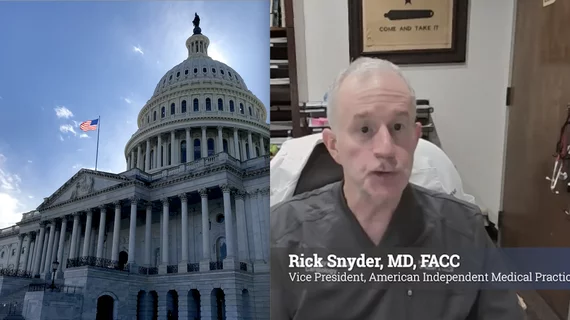
    Medical societies respond after Trump administration questioned necessity of certain procedures

    A recent OIG report suggested vascular surgeons, interventional cardiologists and interventional radiologists may be performing medically unnecessary procedures in office-based labs. Now, some of the leading medical societies from those fields have provided additional context. 

American Society of Nuclear Cardiology (ASNC) President-elect Jamieson M. Bourque, MD, MHS, FASNC, medical director of nuclear cardiology, echocardiography, and the stress laboratory at UVA Health in Charlottesville, and a professor of medicine and radiology at the University of Virginia, explains key trends and his plans to advance nuclear cardiology in 2026. #ASNC

Incoming ASNC president making AI's integration into nuclear cardiology a top priority

Jamieson M. Bourque, MD, MHS, previewed his plans for the future in a new interview with Cardiovascular Business. 

heart data research doctor cardiologist AI

America’s heart failure epidemic is getting worse

Approximately one in four Americans will develop heart failure in their lifetime, according to a new report from the Heart Failure Society of America. What can be done to combat this worrisome trend?

SCAI takes on shock-related mortality with door-to-lactate clearance initiative

The new initiative aims to provide shock teams with objective data that can guide early management decisions and reduce mortality rates. 

Imagers reviewing flurpiridaz F-18 (Flyrcado) myocardial perfusion PET images. Image from GE Healthcare

Nuclear imaging groups share new flurpiridaz guideline

Several groups collaborated on the document, which is designed to help clinicians provide high-quality, consistent care when using flurpiridaz during cardiac PET imaging exams. 

Chris Kramer ACC president will be moderating a global state of health meeting to help the UN better understand the need for investing in preventive care healthcare workers.

ACC: Global health workforce is in need of investment to combat noncommunicable diseases

The American College of Cardiology has committed to reducing morbidity and mortality from noncommunicable diseases by 30% by 2030, but significant investments will be needed to expand the healthcare workforce.

Kimberly Campbell, RN, ANP-BC, nurse practitioner, Saint Luke's Cardiovascular Consultants, explains how her health system took a heart team approach in its wound care transition program for peripheral artery disease (PAD) and critical limb ischemia (CLI) patients that lowered their amputation rate my more than 50%.

St. Luke’s cuts PAD amputation rate in half with heart team-led wound transition program

Kimberly Campbell, RN, nurse practitioner, Saint Luke's Cardiovascular Consultants, explains how her health system took a heart team approach toward peripheral artery disease. 


Joan Michaels, RN, director of the American College of Cardiology (ACC) National Cardiovascular Data Registry (NCDR) Transcatheter Valve Therapies (TVT) and IMPACT congenital heart registries, said the addition of the ambulatory surgical center (ASC) registry comes at a time when hospitals are expanding structural heart programs and ASC's will likely play a growing role to help free up more hospital cath labs for the more complex cases.

New registry helps hospitals expand outpatient services for heart patients

The initiation of the ACC Ambulatory Surgical Center Registry comes at a time when hospitals are expanding their structural heart programs. The registry is providing valuable details about which patients should stay at the hospital and which can be treated in an outpatient setting.

All medical device products in Europe need to obtain the Conformité Européenne mark (European Conformity, or CE mark) regulatory approval. This is based on minimal safety requirements and is needed to be sold in the EU.

Cardiologists lead charge for medical device approvals in Europe to be more rigorous

There is a belief among some clinicians that it is too easy for companies to gain CE mark approval for their medical devices. However, a new proposal from the European Society of Cardiology and other groups could help change that. 

Pagination

    • First page « First
    • Previous page ‹ Previous
    • Page …27
    • Page 28
    • Page 29
    • Page 30
    • Current page 31
    • Page 32
    • Page 33
    • Page 34
    • Page 35 …
    • Next page Next ›
    • Last page Last »
Displaying 241 - 248 of 1540
  • Home
  • News
  • Article Archive
  • Custom Content
  • Webinars
  • Press Releases
  • Content Studio
  • Advertising
  • Submit Press Release
  • Contact Us
  • Terms of Use
  • Privacy Policy
  • Cardiovascular Business
  • HealthExec
  • Radiology Business
 
© 2026 Innovate Healthcare | All Rights Reserved. | Terms of Use | Privacy Policy
 
Design by Adaptive Theme