Transcatheter Cardiovascular Therapeutics (TCT)

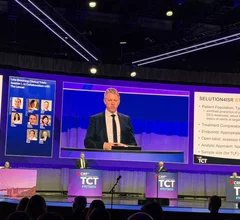
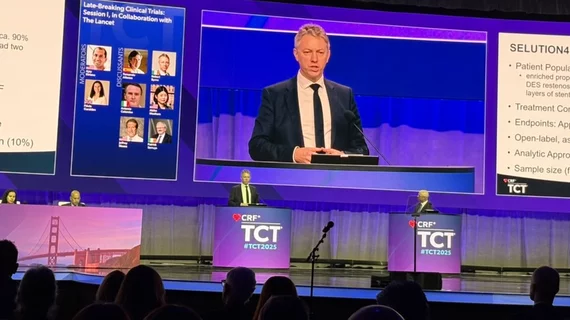
The Transcatheter Cardiovascular Therapeutics (TCT) conference is the Cardiovascular Research Foundation's (CRF) annual scientific symposium and the largest conference focused on interventional cardiovascular medicine. TCT includes seminars on all areas of intervention cardiology, structural heart, vascular in interventions, peripheral artery disease, and other procedures in the cath lab.

Arnold Seto, MD, MPA, FACC, FSCAI, cath lab director, Long Beach VA Medical Center, professor of medicine at Charles Drew University, Society for Cardiovascular Angiography and Interventions (SCAI) treasurer and chair of the SCAI Advocacy Committee, explains changes in payment policy are making ambulatory surgical centers (ASC) and office based labs (OBL) more attractive to both cardiologists and larger health systems.

More interventional procedures may be coming to an ambulatory surgical center near you

ASCs have their limitations, but they are also associated with several benefits for cardiologists and patients alike.

Arnold Seto, MD, MPA, FACC, FSCAI, cath lab director, Long Beach VA Medical Center, professor of medicine at Charles Drew University, Society for Cardiovascular Angiography and Interventions (SCAI) treasurer and chair of the SCAI Advocacy Committee, explains the new CPT reimbursement codes being introduced in January 2026 and their impact on practice.

CPT code updates in 2026 will change how interventional cardiologists get paid

A variety of CPT code changes take effect in 2026, and many of them will make a direct impact on interventional cardiology. Arnold Seto, MD, spoke to Cardiovascular Business about these updates for a new video interview.

The Society of Cardiovascular Computed Tomography (SCCT) is seeing major progress in its long-running push to secure broad reimbursement for artificial intelligence (AI)-enabled coronary CT angiography (CCTA) plaque analysis. According to Roosha Parikh, MD, FACC, FSCCT, associate director of Cardiac CT at St. Francis Heart Hospital, Long Island, New York, and a member of the SCCT Health Policy and Practice Committee, both Medicare and a growing number of private insurers are now covering the technology.

Reimbursement for AI-based plaque assessments is improving

A growing number of private insurers are now covering these advanced technologies. Roosha Parikh, MD, told Cardiovascular Business that the hard work of SCCT and other groups has helped make this happen. 

Gregg W. Stone, MD, Director of Academic Affairs for the Mount Sinai Health System and Professor of Medicine (Cardiology) and Professor of Population Health Science and Policy at the Icahn School of Medicine at Mount Sinai, discusses the ATHENS-HF Trial, a first-in-man study of a chronically-adjustbable, bi-atrial pressure sensing inter-atrial shunt from Adona Medical.

Adjustable interatrial shunt for heart failure shows promise in first-in-human trial

Gregg Stone, MD, spoke to Cardiovascular Business about early data from the ATHENS-HF trial. Ten heart failure patients were treated with the adjustable device, and each implant was a success. 
 

Society of Cardiovascular Angiography and Interventions (SCAI) President Srihari S. Naidu, MD, professor of medicine at New York Medical College, explains the SCAI initiative to improve outcomes in cardiogenic shock by monitoring and lowering patient lactate levels.

SCAI: To improve cardiogenic shock outcomes, reduce lactate levels

SCAI feels this is the best way forward to try lowering mortality rates, but the group is asking cardiologists to help by gathering more data. 

 SCAI President Srihari S. Naidu, MD, professor of medicine at New York Medical College, explained some of the key payment issues interventional cardiologists are facing amid declining Medicare reimbursements.

SCAI fighting for interventional cardiologists amid challenging payment policies

SCAI President Srihari Naidu, MD, detailed some of the challenges interventional cardiologists face as reimbursements keep declining. The group has been building new partnerships with other medical societies to strengthen its influence in Washington. 

artificial intelligence AI heart cardiology

AI dramatically improves the detection of severe heart attacks

Researchers put an advanced AI model to the test, using it to evaluate the ECG results of more than 1,000 patients. It performed quite well. 

Sahil Parikh, MD, director of endovascular services, Columbia University Irving Medical Center, associate professor of medicine at Columbia University, and a program director for the Transcatheter Cardiovascular Therapeutics (TCT) meeting, explains the growing focus in interventional cardiology on endovascular procedures for stroke, pulmonary embolism, peripheral artery disease and renal denervation.

Interventional cardiology showing more interest in endovascular procedures

Sahil Parikh, MD, said it was clear at TCT 2025 that the specialty is getting more and more involved with endovascular procedures for stroke, pulmonary embolism and peripheral artery disease.