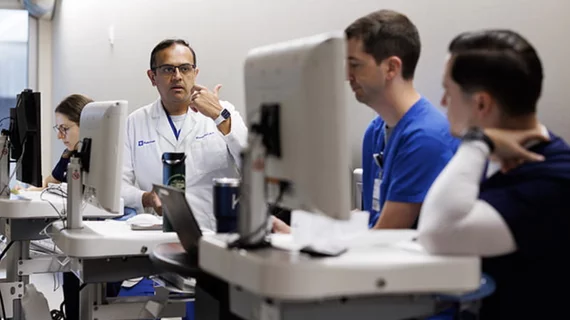
Compensation for U.S. cardiologists is up across the board, according to a recent survey published by MedAxiom, an American College of Cardiology company. The report identified similar trends for cardiovascular surgeons, highlighting the country’s high demand for all heart specialists in 2024 and beyond.

Cardiovascular health in the United States: Exploring the good, the bad and the ugly

A new comprehensive report detailed the latest stats and trends in hypertension, coronary heart disease, stroke and many other areas of interest. “Progress in cardiovascular health depends on knowing where we stand,” the authors wrote. “To improve, we must measure—not occasionally, but consistently, transparently and with purpose.”

Mirvat Alasnag, MD, FACP, FACC, FSCAI, FSCCT, director of catheterization laboratory and research, King Fahd Armed Forces Hospital, Jeddah-Saudi Arabia, Ditrector of TCT Middle East, and member of Society of Cardiovascular CT (SCCT) Education Committee, explains how the society it translating its educational content into other languages to help a wider international audience of clinicians. SCCT is working to expand its international membership and this is a big part of that strategy.

SCCT expands CCTA education overseas

SCCT has made it a priority to help clinicians from all over the world learn more about CCTA as the modality continues to transform patient care. 

Sunil Rao, MD, MSCAI, director, interventional cardiology, cardiac catheterization laboratory, NYU Langone Heart, professor, Department of Medicine, the Leon H. Charney Division of Cardiology, NYU Grossman School of Medicine, explains the prevalence, trends and predictors of same day discharge after percutaneous coronary intervention (PCI) data for non-ST-elevation acute coronary syndrome (NSTE-ACS) in clinical practice from the NCDR-CathPCI Registry.

Same-day discharge after PCI for NSTE-ACS is on the rise

Sunil Rao, MD, told Cardiovascular Business that same-day discharge is still relatively rare for these patients, but it appears to be growing more common over time. The COVID-19 pandemic appears to have played a key role in the development of this trend.

Nirat Beohar, MD, director, cardiac catheterization laboratory, medical director of the structural heart disease program, Mount Sinai Medical Center in Miami Beach, Florida, and a professor at the Columbia University Division of Cardiology, explains the financial landscape of the cath lab, what is ahead, and why cardiologists need to become more business savvy. #TCT

The business of cardiology is changing—and cath labs are working to keep up

Financial literacy is no longer optional for physicians. “If you're not financially viable, you can't function,” explained Nirat Beohar, MD. “The business education is probably just as important as learning a new procedure.”

leg veins chronic venous disease PAD peripheral artery disease

Cardiovascular health societies share new performance and quality measures for PAD management

The ACC and AHA have published updated performance and quality measures focused on the diagnosis and management of peripheral artery disease. Several other specialty societies, including SCAI and SIR, also participated in the development of this new document.

RSNA seeking new editor for cardiothoracic imaging journal

RSNA is looking for a replacement for Suhny Abbara, MD, who is now the editor-in-chief of its flagship journal.

Newsweek ranked the 50 best heart hospitals in the world

Cardiologists perform first procedure of its kind to prevent coronary obstruction after TAVR

A vulnerable heart patient required TAVR, but he faced an extremely high risk of coronary obstruction. Leaflet modification and snorkel stenting were not possible, so the group turned to a brand new treatment option: the VECTOR procedure.

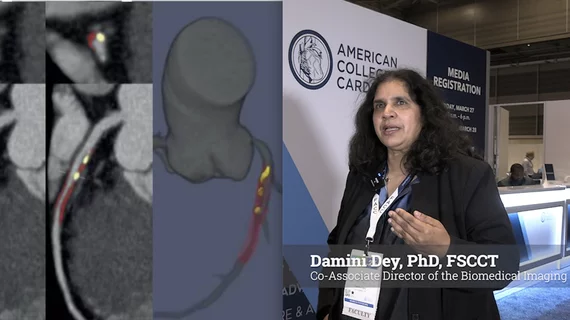
Mirvat Alasnag, MD, FACP, FACC, FSCAI, FSCCT, director of catheterization laboratory and research, King Fahd Armed Forces Hospital, Jeddah-Saudi Arabia, director of TCT Middle East, and member of Society of Cardiovascular CT (SCCT) Education Committee, outlines why coronary CT angiography (CCTA) imaging will likely be a paradigm shift in cardiology, and where the gaps remain to gather more clinical evidence.

CCTA continues to transform cardiac imaging, interventional cardiology

Mirvat Alasnag, MD, spoke to Cardiovascular Business about CCTA's growing influence in cardiology.