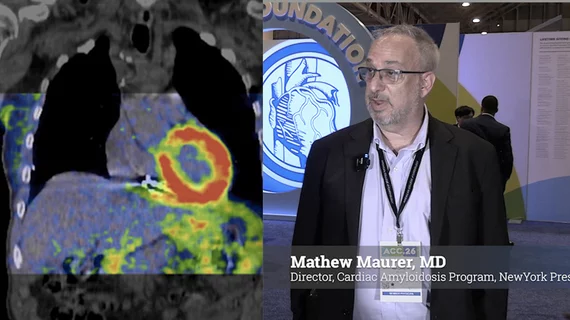
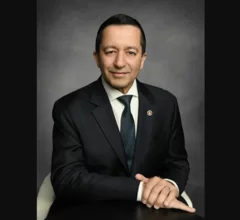
American Society of Nuclear Cardiology (ASNC) President-elect Jamieson M. Bourque, MD, MHS, FASNC, medical director of nuclear cardiology, echocardiography, and the stress laboratory at UVA Health in Charlottesville, and a professor of medicine and radiology at the University of Virginia, said the society is fighting a major proposed cut in CMS reimbursements in 2026.

ASNC calls on members to fight 57% Medicare cut for cardiac amyloid imaging

Jamieson M. Bourque, MD, MHS, president-elect of the American Society of Nuclear Cardiology, shared the group's concerns with Cardiovascular Business. “This is going to have a highly negative impact," he said. 

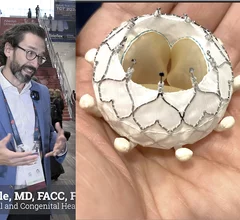
The Medtronic CoreValve Evolut and the Edwards Lifesciences Sapien 3 TAVR valves.

TAVR still a safe option for patients with nickel allergies

More research is still needed, as this study only included data from a small number of patients, but TAVR was not linked to any severe adverse events or allergic reactions.

Exploring the link between left ventricular diastolic function and AFib

Evaluating LVDF with echocardiography or AI-powered electrocardiography can help identify individuals at an increased risk of developing atrial fibrillation, according to new data presented at the ASE 36th Annual Scientific Sessions.

The key figure from NEJM publication confirms the survival benefit of Impella CP increases year-over-year. Source: Møller J, et al. Long Term Outcomes of the DanGer Shock Trial. N Engl J Med 2025.

DanGer Shock update: Impella CP heart pump linked to long-term survival benefit

When patients present with STEMI-related cardiogenic shock, treatment with the Impella CP appears to make a positive impact that lasts for at least a decade.

Newsweek ranked the 50 best heart hospitals in the world

Q&A: Cardiologist explores CMS proposal to cover cardiac ablations performed in ambulatory surgical centers

CMS has proposed a policy shift that would allow cardiac ablation procedures to be performed in ambulatory surgical centers. Arash Aryana, MD, PhD, a veteran cardiac electrophysiologist, explained why he is "extremely encouraged" by this proposal, highlighting several potential benefits. 

Toby Rogers, MD, PhD, associate professor of medicine Georgetown University, and interventional cardiologist at MedStar Heart and Vascular Institute Structural Heart Disease program, explains how the transcatheter electrosurgical procedures for transcaval access, SESAME, LAMPOON and BASILICA has helped large numbers of patients receive transcatheter heart valves who otherwise would have been disqualified due to anatomical issues.

Advances in electrosurgical techniques have helped thousands of transcatheter valve patients

Toby Rogers, MD, associate professor of medicine at Georgetown University and an interventional cardiologist at MedStar, explains how electrosurgical procedures for transcaval access have helped large numbers of patients receive transcatheter heart valves who otherwise would have been disqualified due to anatomical issues. 
 

Pei-Ni Jone, MD, FASE, director, echocardiography laboratory, Lurie Children’s Hospital Heart Center, professor of pediatric cardiology, Northwestern University Feinberg School of Medicine, member of the American Society of Echocardiography (ASE) Board, and the chair of the ASE Pediatric and Congenital Heart Disease Council Steering Committee, explains how 3D echo is being used to better plan, guide and followup in congenital cardiac surgery.

3D echo guidance seeing increasing use in congenital heart surgery

Pei-Ni Jone, MD, FASE, director, echocardiography laboratory, Lurie Children’s Hospital Heart Center, member of the American Society of Echocardiography (ASE) Board, explains how 3D echo is being used to better plan, guide and follow up in congenital cardiac surgery.

The European Society of Cardiology (ESC) annual congress has become the largest cardiology in the world with more than 33,000 healthcare professionals at the 2025 meeting. Photo by ESC

ESC Congress broke new record with over 33,000 attendees

The European Society of Cardiology had nearly twice as many attendees as ACC this year, as the European meeting secures its place as the largest cardiology meeting in the world.