Women’s imaging encompasses many radiology procedures related to women and the diseases that are most prevalent to women such as breast cancer or gynecological issues. Mammogram, breast ultrasound, breast MRI and breast biopsy are the most commonly used procedures.

The group was recently asked to provide input on a new set of recommendations for image-guided biopsies of suspicious breast lesions—offering providers clarity on key clinical scenarios.
Published Friday in JAMA, scientists recently explored a risk-based mammography tactic that tailors regular imaging regimens to each individual’s danger of developing the disease.
In some cases, it may actually be more beneficial for this group of women to forego the extra scans, as they can lead to additional testing, costs and potentially delays in care.
Between 20% to 24% of all breast cancers diagnosed during a decade-long period were found in women between the ages of 18 to 49, according to research presented at RSNA 2025.
Women with ATM, CHEK2 and PALB2 gene mutations would benefit from beginning MRI screenings earlier than previously recommended, experts reported in JAMA Oncology.
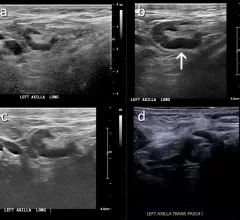
Reactive axillary lymph nodes seen on screening mammograms after vaccination can last for many months and should not be cause for imaging delays, experts reported in Radiology.
After surgical excision, 10.2% of the architectural distortion cases with nonmalignant pathology at biopsy were upgraded to malignant, researchers reported in the American Journal of Roentgenology.
The initiative led to a 30% increase in the number of patients who required fewer visits before receiving a diagnosis, University of Michigan Health System researchers reported.
“Our study results suggest that AB-MRI could potentially be sufficient for post-treatment surveillance,” experts suggested Thursday in Academic Radiology.