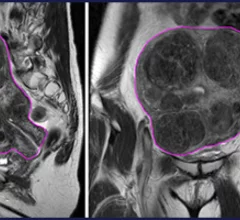
Women’s imaging encompasses many radiology procedures related to women and the diseases that are most prevalent to women such as breast cancer or gynecological issues. Mammogram, breast ultrasound, breast MRI and breast biopsy are the most commonly used procedures.

The findings come from Sweden's Mammography Screening with Artificial Intelligence, or MASAI, a randomized clinical trial incorporating over 105,000 women.
There is limited research comparing HHUS and ABUS in second-look settings despite the fact that these exams are routinely utilized as supplemental imaging tools.
Authors of a new paper contend their findings could be beneficial in adapting public messaging related to supplemental imaging to better inform those who may need it.
Ultrasound-guided diffuse optical tomography (US-DOT) is a technique that combines the use of ultrasound with near-infrared light to create 3D pictures of tissues.
A team of experts determined that correlating masses initially detected on MRI are significantly more likely to result in a cancer diagnosis than other common findings.
Penn Medicine experts conducted two randomized clinical trials, with women receiving text message reminders, bulk orders or letters endorsed by their PCP.
Those in their 30s also have seen a nearly 13% uptick in occurrence of the disease, experts detailed in the Canadian Association of Radiologists Journal.
This latest research further confirms that breast MRI not only detects tumors that mammography cannot, but it also spots invasive cases that pose greater risks to patients.
Experts, medical organizations and advocates alike are coming forward saying that the new guidelines “do not go far enough,” particularly when it comes to addressing the screening needs of certain patients.