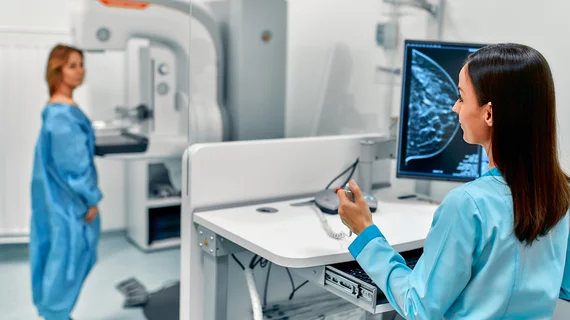
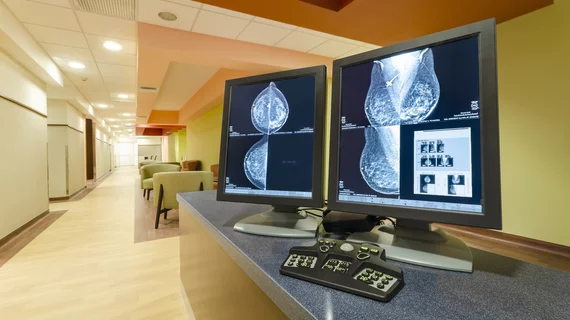
Women’s imaging encompasses many radiology procedures related to women and the diseases that are most prevalent to women such as breast cancer or gynecological issues. Mammogram, breast ultrasound, breast MRI and breast biopsy are the most commonly used procedures.

Researchers believe the technique also could have utility for brain, head and neck MRI applications and could eventually be adapted to other imaging modalities as well.
Breast cancer risk scores change over time, with those who go on to develop cancer showing unique patterns that could provide valuable guidance into their diagnostic needs.
The manufacturer issued an alert in January, indicating its Brevera Breast Biopsy System Disposable 9 Gauge Needles were being recalled amid risk they might leave metallic particles in tissue.
New Hampshire is one of the latest after Republican Gov. Chris Sununu signed House Bill 1296 into law May 31, eliminating OOP expenses for supplemental services.
This reduction protocol allows for acceptable lesion visualization while also providing a cautionary cushion when the safety of sequential contrast injections is in question.
Although DBT exams are proven to identify more difficult to detect cancers, especially among women with dense breasts, they also include significantly more images than standard 2D mammograms.
The Class I recall, which is the most serious recall the FDA issues, comes after numerous adverse events and complications linked to the radiographic markers were reported.
UPDATED: The alert pertains to the BioZorb and BioZorb LP radiographic markers, implanted in soft tissue to indicate the site for radiation therapy or other medical procedures.