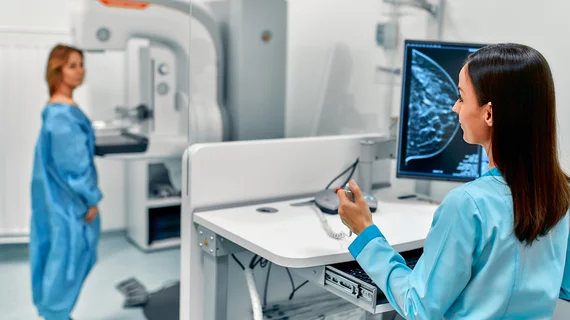
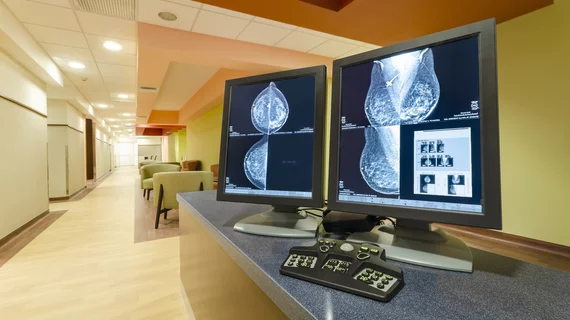
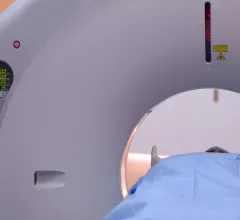
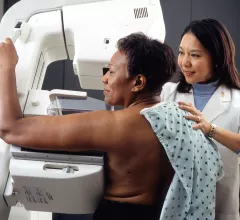
Women’s imaging encompasses many radiology procedures related to women and the diseases that are most prevalent to women such as breast cancer or gynecological issues. Mammogram, breast ultrasound, breast MRI and breast biopsy are the most commonly used procedures.

Published Friday in JAMA, scientists recently explored a risk-based mammography tactic that tailors regular imaging regimens to each individual’s danger of developing the disease.
In some cases, it may actually be more beneficial for this group of women to forego the extra scans, as they can lead to additional testing, costs and potentially delays in care.
Between 20% to 24% of all breast cancers diagnosed during a decade-long period were found in women between the ages of 18 to 49, according to research presented at RSNA 2025.
During an education session at RSNA 2025, several experts who contributed to the manual spoke on what has changed and how these revisions will affect providers.
Such behavior can lead to "increased stress and job dissatisfaction, at the expense of well-being of breast radiologists,” MD Anderson experts wrote in Clinical Imaging.
The Addison, Texas-based company was founded in 1986 and in 2018 sold a majority stake to private equity firm Madison Dearborn Capital Partners, which has pursued rapid expansion.
Few of those polled believe they are at risk of developing the disease, according to new research from the Ohio State University Comprehensive Cancer Center.
The “multilevel” intervention involved EHR reminders, patient outreach and navigation to encourage individuals to return following breast or lung imaging.