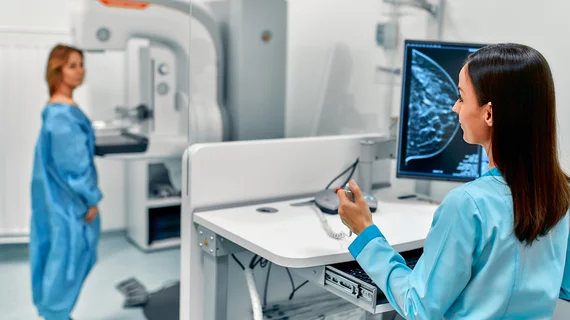
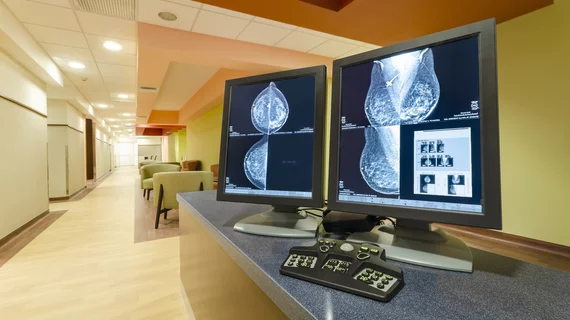
Women’s imaging encompasses many radiology procedures related to women and the diseases that are most prevalent to women such as breast cancer or gynecological issues. Mammogram, breast ultrasound, breast MRI and breast biopsy are the most commonly used procedures.

Published Friday in JAMA, scientists recently explored a risk-based mammography tactic that tailors regular imaging regimens to each individual’s danger of developing the disease.
In some cases, it may actually be more beneficial for this group of women to forego the extra scans, as they can lead to additional testing, costs and potentially delays in care.
Between 20% to 24% of all breast cancers diagnosed during a decade-long period were found in women between the ages of 18 to 49, according to research presented at RSNA 2025.
During an education session at RSNA 2025, several experts who contributed to the manual spoke on what has changed and how these revisions will affect providers.
Allegheny Health Network in Pennsylvania has seen an uptick in women seeking services from the AHN Jefferson Breast Center, necessitating the capital project.
The more an individual’s score changes, the greater the odds are of them being diagnosed with cancer in the near future, new research presented at SIIM 2024 suggests.
The scoring system has shown great utility in predicting lymph node invasion in various cancers, but until recently, its use in patients with breast cancer had not been thoroughly explored.
Research has proven that certain social determinants of health—such as housing instability, costs and insurance—can impact adherence. What about food insecurity?