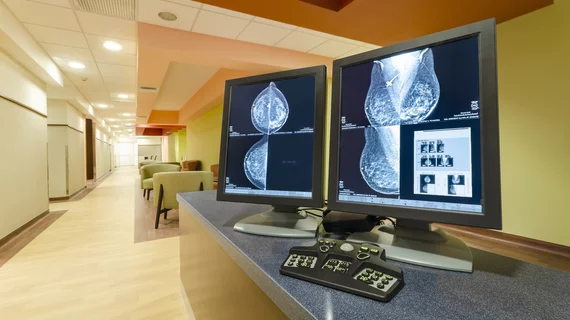
Women’s imaging encompasses many radiology procedures related to women and the diseases that are most prevalent to women such as breast cancer or gynecological issues. Mammogram, breast ultrasound, breast MRI and breast biopsy are the most commonly used procedures.

The new policy applies to all health plans across Pennsylvania, New York, West Virginia and Delaware, “removing financial barriers for essential breast cancer diagnostics.”
The group was recently asked to provide input on a new set of recommendations for image-guided biopsies of suspicious breast lesions—offering providers clarity on key clinical scenarios.
Published Friday in JAMA, scientists recently explored a risk-based mammography tactic that tailors regular imaging regimens to each individual’s danger of developing the disease.
In some cases, it may actually be more beneficial for this group of women to forego the extra scans, as they can lead to additional testing, costs and potentially delays in care.
Beginning September 10, breast imaging facilities will be required to notify patients about the density of their breasts, among other regulatory changes.
On average, American women need to travel about 8 miles to reach the closest mammography screening facility or 23 miles for a breast MRI, experts noted.
A screen first approach for women who present with breast pain decreases healthcare spending without the risk of overlooking cancer, new analysis shows.
Debra Monticciolo, MD, who has previously led both the Society of Breast Imaging and the American College of Radiology, discussed how different screening strategies may impact patient outcomes.