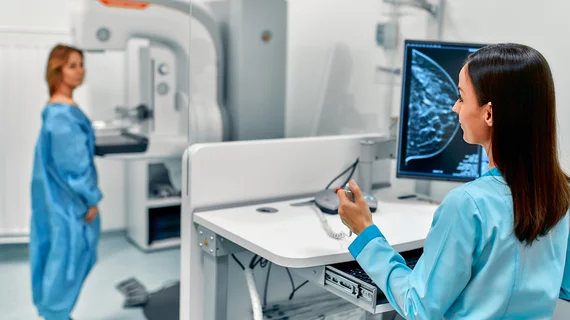
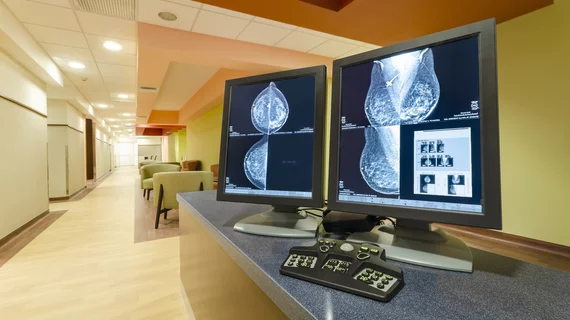
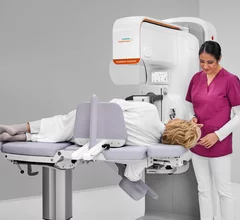
Women’s imaging encompasses many radiology procedures related to women and the diseases that are most prevalent to women such as breast cancer or gynecological issues. Mammogram, breast ultrasound, breast MRI and breast biopsy are the most commonly used procedures.

Between 20% to 24% of all breast cancers diagnosed during a decade-long period were found in women between the ages of 18 to 49, according to research presented at RSNA 2025.
During an education session at RSNA 2025, several experts who contributed to the manual spoke on what has changed and how these revisions will affect providers.
Although DBT exams are proven to identify more difficult to detect cancers, especially among women with dense breasts, they also include significantly more images than standard 2D mammograms.
The Class I recall, which is the most serious recall the FDA issues, comes after numerous adverse events and complications linked to the radiographic markers were reported.
UPDATED: The alert pertains to the BioZorb and BioZorb LP radiographic markers, implanted in soft tissue to indicate the site for radiation therapy or other medical procedures.
Although studies have shown AI to be effective as a support tool, several have also highlighted issues related to the potential for bias in algorithms that have not been trained on diverse datasets.
In individuals who have not completed a DEXA scan, head CT conducted for other reasons can offer insight into patients’ frontal bone density, a potential marker of osteoporosis.
The new research, presented during ARRS 2024 in Boston, suggests CVD risk models may need to include certain findings identified in routine mammograms.