“Patients are in desperate need of an effective treatment, and we are doing everything we can to help find that treatment,” one scientist explained. “The greatest reward would be to see a safe and effective treatment for people who currently have very few options.”
When heart patients are diagnosed with severe AS, how quickly do they need to undergo TAVR? That was the focus of a new analysis published in Open Heart.
Artificial intelligence tools have proven to be beneficial in detecting pulmonary nodules on chest CTs of adults, but less is known about their utility in pediatric populations.
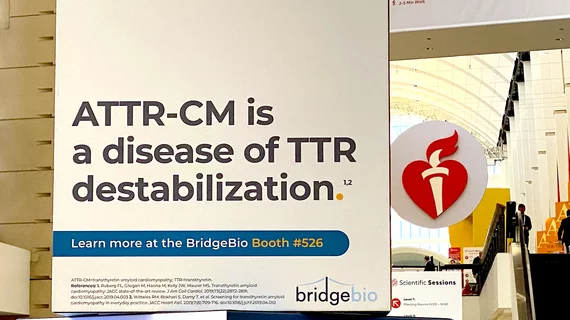
Cardiologists and other physicians have always believed cardiac transthyretin amyloidosis, a progressive heart condition associated with a high mortality rate, was irreversible. Now, though, new evidence suggests that there may be hope.
Motives for the hesitancy are several—transportation concerns, informational inadequacies, historical wrongs—but effective resolutions can be quite simple.
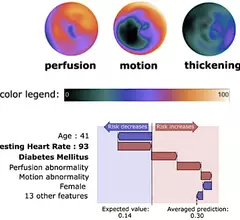
Cedars-Sinai researchers are developing a deep-learning algorithm to personalize patient cardiac risk predictions in a patient-friendly, graphical report.
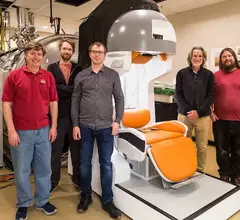
Someday, getting an MRI exam could be as simple as having food delivered to your door—at least that is the hope of a group of experts at the University of Minnesota who are working on a compact system said to be small enough to sit in the bed of a truck.