Home

Cardiology Associations

This page includes news coverage of cardiology societies and associations. Follow these links for specific cardiology society news pages: American College of Cardiology (ACC), American Heart Association (AHA), American Society of Echocardiography (ASE),  American Society Nuclear Cardiology (ASNC), European Society of Cardiology (ESC), Heart Rhythm Society (HRS), Society for Cardiovascular Angiography Interventions (SCAI), Society of Cardiovascular Computed Tomography (SCCT), Transcatheter Cardiovascular Therapeutics (TCT), and Vascular Interventional Advances (VIVA). 

RSS icon

  • Performing transcatheter aortic valve replacement (TAVR) with the J-Valve transcatheter heart valve (THV) may help limit the risk of coronary artery obstruction (CAO) in high-risk patients, according to a new study published in Clinical Interventions in Aging.[1]

    TAVR with Edwards Lifesciences valve for severe AR linked to ‘encouraging’ data

    All patients presented with severe aortic regurgitation. The study's findings were presented at New York Valves 2026 and published in JSCAI.

  • Thumbnail

    Chest pain drug lowers risk of kidney injury after PCI

    Treating certain high-risk PCI patients with nicorandil before and after treatment can significantly reduce their risk of contrast-related injuries.

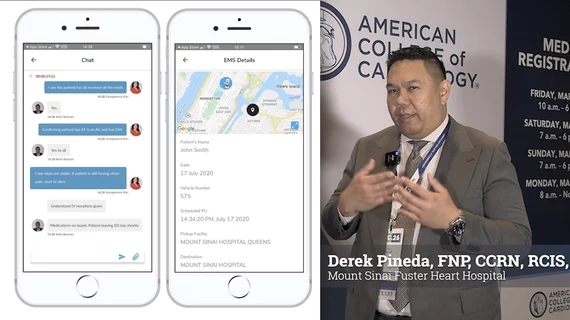
  •  Derek Pineda, FNP, CCRN, RCIS, FACC, with Mount Sinai Fuster Heart Hospital, explains the use of a digital app platform for STEMI team coordination that helped his health system improve STEMI outcomes.

    New digital platform gets clinicians on the same page when treating heart attacks

    One of the platform's biggest benefits is the rich clinical information it provides to all members of the care team.

  • heart doctor cardiologist

    Sex-specific outcomes after TAVR and SAVR: Key takeaways from a new meta-analysis

    TAVR was associated with early benefits for women. After five years, however, outcomes were comparable across the board.

  • Hundreds of cardiologists incorrectly added to new mandatory payment model

    When CMS shared a list of cardiologists being targeted with a brand new payment model, the American College of Cardiology identified a long list of apparent mistakes.

Compensation for U.S. cardiologists is up across the board, according to a recent survey published by MedAxiom, an American College of Cardiology company. The report identified similar trends for cardiovascular surgeons, highlighting the country’s high demand for all heart specialists in 2024 and beyond.

Q&A: MedAxiom CEO explores key trends in cardiologist, cardiovascular surgeon compensation

Compensation for heart specialists continues to climb. What does this say about cardiology as a whole? Could private equity's rising influence bring about change? We spoke to MedAxiom CEO Jerry Blackwell, MD, MBA, a veteran cardiologist himself, to learn more.

Daniel Judge, MD, director of the cardiovascular genetics program, Medical University of South Carolina, the Edwin W. and Teresa H. Rogers Endowed Chair for Cardiovascular Research, Medical University of South Carolina, presented the results of the late-breaking ATTRibute-CM study for the drug acoramidis used to treat transthyretin amyloidosis at AHA 2024.

ATTR-CM drug acoramidis, now approved by the FDA, linked to positive long-term data

Cardiovascular Business spoke with cardiologist Daniel Judge, MD, about the long-term benefits of acoramidis, a new drug therapy that just received FDA approval to treat transthyretin amyloid cardiomyopathy.

SCAI celebrated William W. O'Neill, MD, and Cindy L. Grines, MD, two veteran interventional cardiologists who played key roles guiding the development of primary percutaneous coronary intervention (PCI) as a treatment for ST-elevated myocardial infarction (STEMI) patients.

Cardiologists reflect on developing primary PCI in face of criticism and pushback

SCAI celebrated cardiologists William W. O'Neill, MD, and Cindy L. Grines, MD, for the important roles they played in the development of primary PCI. “It was challenging,” Grines explained. “We had the pharmaceutical industry that was anti-primary angioplasty and we had a lot of our own colleagues that were anti-primary angioplasty."

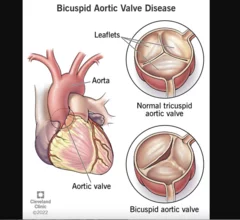
bicuspid aortic valve disease TAVR

How TAVR valve choice impacts outcomes when treating type 1 bicuspid AS

Self-expanding and balloon-expandable TAVR valves are associated with comparable success rates and one-year outcomes when treating type 1 bicuspid aortic stenosis. However, each valve type comes with its own advantages and disadvantages.

Example of intravascular ultrasound (IVUS) shown as part of the multimodality imaging capability on the Fujifilm CVIS.

IVUS-guided PCI reduces risks in patients with diabetes

PCI can be more challenging in high-risk patients presenting with diabetes and ACS. IVUS guidance was associated with improved outcomes among these patients compared to angiography guidance alone. 

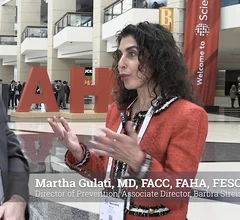
Video of Martha Gulati explaining preventive cardiology advanacements for obese patients. #AHA24 #AHA2024 #CVprev

Martha Gulati highlights 'exciting' progress in preventive cardiology

Martha Gulati, MD, spoke to Cardiovascular Business at AHA Scientific Sessions 2024 about key developments in obesity treatment and CVD prevention.

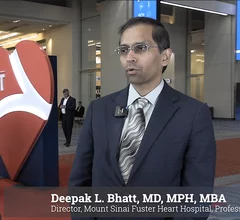
Deepak Bhatt, MD, MPH, MBA, director of the Mount Sinai Fuster Heart Hospital, explains the research and therapies in development to treat coronary inflammation. In 2023, the FDA cleared the use colchicine and since there has been an explosion of interest in this area. #TCT #TCT24 #TCT2024 #AHA24

Cardiologist examines the latest breakthroughs in coronary inflammation research

Deepak Bhatt, MD, MPH, MBA, spoke to Cardiovascular Business about the growing importance of evaluating coronary inflammation in heart patients. There has been an explosion of interest in this area since the FDA's 2023 clearance of colchicine.

Left atrial appendage occlusion (LAAO) with the Watchman FLX device from Boston Scientific is associated with positive outcomes and limited adverse events after one year, according to new findings published in Circulation: Cardiovascular Interventions.[1] Many prior Watchman FLX studies, including PINNACLE FLX, had focused on the device’s performance in a controlled setting. The study’s authors hoped to gain a better understanding of its real-world impact by reviewing registry data from more than 97,000 U.S

LAAC with Watchman FLX reduces bleeding risks after AFib ablation

The new data, presented during AHA Scientific Sessions 2024, suggest LAAC with Boston Scientific's Watchman FLX could be a safe, effective alternative to OAC for limiting post-ablation strokes.

Pagination

    • First page « First
    • Previous page ‹ Previous
    • Page …66
    • Page 67
    • Page 68
    • Page 69
    • Current page 70
    • Page 71
    • Page 72
    • Page 73
    • Page 74 …
    • Next page Next ›
    • Last page Last »
Displaying 553 - 560 of 1560
  • Home
  • News
  • Article Archive
  • Custom Content
  • Webinars
  • Press Releases
  • Content Studio
  • Advertising
  • Submit Press Release
  • Contact Us
  • Terms of Use
  • Privacy Policy
  • Cardiovascular Business
  • HealthExec
  • Radiology Business
 
© 2026 Innovate Healthcare | All Rights Reserved. | Terms of Use | Privacy Policy
 
Design by Adaptive Theme