Images coronary calcium imaging by optical coherence tomography (OCT) and high-definition intravascular ultrasound (IVUS).

OCT-guided PCI improves survival after life-threatening heart attacks

Researchers explored data from nearly 4,000 STEMI patients, noting that optical coherence tomography may be a valuable first step of any treatment strategy. 

cardiologists evaluating the human heart to provide a treatment strategy

Managing stable angina: How cardiologists can find the right mix of revascularization, therapy and interventions

The management of stable angina has been evolving at a rapid rate. Using a one-size-fits-all strategy is becoming a thing of the past, replaced by a patient-centered approach that requires open communication and a healthy understanding of recent clinical research.

Ron Blankstein, MD, FACC, FASNC, MSCCT, FASPC, associate director, cardiovascular imaging program, director, cardiac computed tomography, Brigham and Women’s Hospital, and a professor of medicine and radiology, Harvard Medical School, explains a few of the recent advancements in cardiac MRI, nuclear imaging and computed tomography.

Exploring major breakthroughs in cardiac imaging

Ron Blankstein, MD, director of cardiac computed tomography for Brigham and Women’s Hospital, details recent developments in cardiac MRI, nuclear imaging and CT.

first-in-man valve-in-valve caval valve implantation

Cardiologists perform world’s first valve-in-valve caval valve procedure in heart transplant patient

A care team in Germany has completed what may be the first structural heart procedure of its kind on a high-risk patient. It started as a straightforward heterotopic caval valve implantation, but then paravalvular leak resulted in a change of plans. 

CMR of a patient showing evidence of myocardial hypertrophy

MRI results help cardiologists predict heart failure risk

"This breakthrough suggests that heart MRI could potentially replace invasive diagnostic tests," one specialist said. 

Left atrial appendage occlusion (LAAO) with the Watchman FLX device from Boston Scientific is associated with positive outcomes and limited adverse events after one year, according to new findings published in Circulation: Cardiovascular Interventions.[1] Many prior Watchman FLX studies, including PINNACLE FLX, had focused on the device’s performance in a controlled setting. The study’s authors hoped to gain a better understanding of its real-world impact by reviewing registry data from more than 97,000 U.S

LAAO with Watchman FLX associated with positive 1-year outcomes, real-world data confirm

Researchers hoped to gain a better understanding of the device's real-world impact by reviewing registry data from more than 97,000 U.S. patients. Overall, the Watchman FLX was linked to positive data and limited adverse events one year after treatment. 

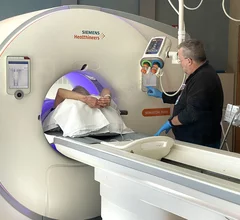
CMS may double Medicare payments for cardiac CT

The agency is gathering feedback on a proposal to double the amount hospitals are paid for coronary computed tomography angiography, with the comment period ending Sept. 9.

physician tracking patient data and reporting on outcomes

Cardiology groups introduce new performance, quality measures for heart failure

The American College of Cardiology, American Heart Association and Heart Failure Society of America worked together on the updated document, adding three new performance measures and six new quality measures. They did not remove a single recommendation from the previous document published in 2020.