Home

Cardiology Associations

This page includes news coverage of cardiology societies and associations. Follow these links for specific cardiology society news pages: American College of Cardiology (ACC), American Heart Association (AHA), American Society of Echocardiography (ASE),  American Society Nuclear Cardiology (ASNC), European Society of Cardiology (ESC), Heart Rhythm Society (HRS), Society for Cardiovascular Angiography Interventions (SCAI), Society of Cardiovascular Computed Tomography (SCCT), Transcatheter Cardiovascular Therapeutics (TCT), and Vascular Interventional Advances (VIVA). 

RSS icon

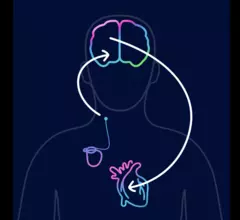
  • Video: Vivek Reddy, MD, Director, Cardiac Arrhythmia Service, The Leona M. and Harry B. Helmsley Charitable Trust Professor of Medicine in Cardiac Electrophysiology, Icahn School of Medicine at Mount Sinai, explains studies on the latest pulsed field ablation and leadless conduction pacing trials. #PFA #conductionpacing

    Exploring the latest data in PFA and leadless conduction system pacing

    Vivek Reddy, MD, spoke to Cardiovascular Business about some of the biggest trends in electrophysiology today.

  • Samuel Jones, MD, MPH, director of inpatient electrophysiology at the Memorial Hospital, Chattanooga Heart Institute, discusses concerns over new heart failure Medicare Ambulatory Specialty Model payment model that starts on Jan. 1, 2027.

    Cardiologists scramble to prepare for mandatory heart failure payment model

    Samuel Jones, MD, reviews some of the biggest concerns about a new Medicare payment model focused on heart failure care that goes live in 2027. 

  • President Trump's presidential proclamation Sept. 19 to implement a $100,000 fee for H-1B visa applications had immediate backlash from dozens of medical societies. Groups like the American Medical Association (AMA) and the American College of Cardiology (ACC) said this will cut off the flow of foreign physicians into the U.S. at a time when we cannot graduate enough American physicians to fill positions in a healthcare system that is facing a rapidly growing physician shortage.

    Trump administration exempts doctors from work visa freeze

    SCAI said reversing the processing hold allows physicians to continue serving patients and helps stabilize the workforce.

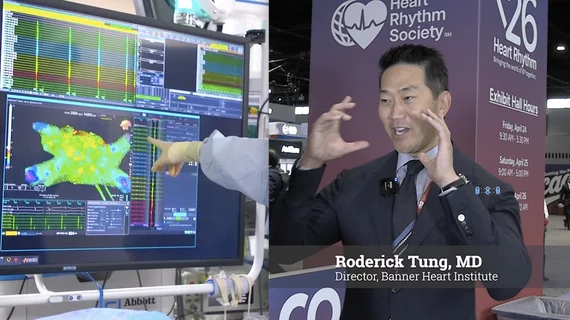
  • Devi Nair, MD, director of electrophysiology and research, St. Bernards Medical Center and Arrhythmia Research Group, spoke with Cardiovascular Business at the Heart Rhythm 2026 meeting in the above video interview. She explained both the explosion of PFA use since the first FDA approvals in 2024, and the recently discovered complications of coronary vessel spasm and hemolysis and how newer PFA technology might address this.

    PFA has been a game-changer for heart patients—but there are still risks

    Devi Nair, MD, reviewed some of the rare complications clinicians are seeing with PFA.

  • Cardiac amyloidosis on nuclear imaging of the heart using 11C-PiB PET/CT. Image courtesy of RSNA

    Cardiac amyloidosis in the spotlight at Heart Failure 2026

    Cardiac amyloidosis continues to get more and more attention at cardiology meetings. At Heart Failure 2026 in Spain, it was the topic of multiple studies, including one on the benefits of acoramidis.

Thumbnail

New guideline on mechanical circulatory support tackles device selection, ethical dilemmas and more

The Heart Failure Society of America and International Society for Heart and Lung Transplantation worked together on the document, hoping their recommendations serve as a "critical roadmap" for clinicians. 

Ajay J. Kirtane, MD, director of the cardiac catheterization laboratories and professor of medicine at NewYork-Presbyterian/Columbia University Irving Medical Center, explains the current trial data on catheter renal denervation to treat drug-resistant hypertension at AHA 2022.

Where renal denervation stands for the treatment of drug-resistant hypertension

Ajay Kirtane, MD, director of the cardiac catheterization laboratories at NewYork-Presbyterian/Columbia University Irving Medical Center, explained the most recent clinical trial data on this topic. 

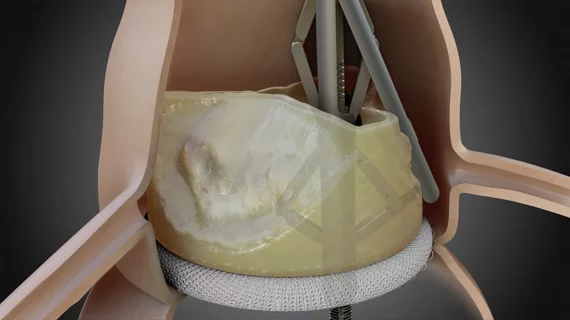
Balloon expansion deployment of an Edwards Lifesciences Sapien 3 transcatheter aortic valve replacement (TAVR) device.

New Jersey hospital performs 4,000th TAVR procedure

Morristown Medical Center first started performing TAVR procedures in 2011 and is now home to one of the largest TAVR programs in the United States. 

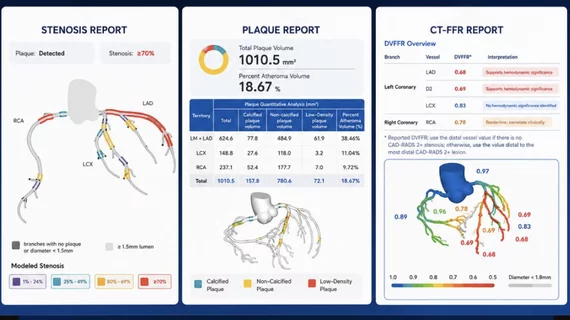
An example of an FDA cleared radiology AI algorithm to automatically take a cardiac CT scan and identify, contour and quantify soft plaque in the coronary arteries. The Cleerly software then generates an automated report with images, measurements and a risk assessment for the patient. This type of quantification is too time consuming and complex for human readers to bother with, but AI assisted reports like this may become a new normal over the next decade. Example from Cleerly Imaging at SCCT 2022.

Legal considerations for artificial intelligence in radiology and cardiology

There are now more than 520 FDA-cleared AI algorithms and the majority are for radiology and cardiology, raising the question of who is liable if the AI gets something wrong.

Surgeons Operating On Patient

AI model predicts risk of post-operative AFib

Post-operative atrial fibrillation was once viewed as a fairly insignificant issue, but more recent research suggests it can increase a patient’s risk of multiple adverse events. 

Samir Kapadia, MD, chairman of the Robert and Suzanne Tomsich Department of Cardiovascular Medicine, Sydell and Arnold Miller Family Heart, Vascular and Thoracic Institute at Cleveland Clinic, explains why he believes the results of the late-breaking PROTECTED TAVR testing the use of a TAVR cerebral protection device were positive, although it did not meet its primary endpoint.

VIDEO: Exploring the use of cerebral protection devices during TAVR

Samir Kapadia, MD, chair of the department of cardiovascular medicine at Cleveland Clinic, shared his perspective on the use of cerebral protection devices during TAVR procedures. 

Thumbnail

More than a feeling? Social isolation, loneliness linked to a higher heart failure risk

A new study published in JACC: Heart Failure offers more evidence that a patient's feelings can strongly influence their risk of poor cardiovascular health. 

A key step forward: Researchers ID the genes responsible for CAD

The team hopes its findings can lead to significant progress in the war against fatty plaques.

Pagination

    • First page « First
    • Previous page ‹ Previous
    • Page …128
    • Page 129
    • Page 130
    • Page 131
    • Current page 132
    • Page 133
    • Page 134
    • Page 135
    • Page 136 …
    • Next page Next ›
    • Last page Last »
Displaying 1049 - 1056 of 1526
  • Home
  • News
  • Article Archive
  • Custom Content
  • Webinars
  • Press Releases
  • Content Studio
  • Advertising
  • Submit Press Release
  • Contact Us
  • Terms of Use
  • Privacy Policy
  • Cardiovascular Business
  • HealthExec
  • Radiology Business
 
© 2026 Innovate Healthcare | All Rights Reserved. | Terms of Use | Privacy Policy
 
Design by Adaptive Theme