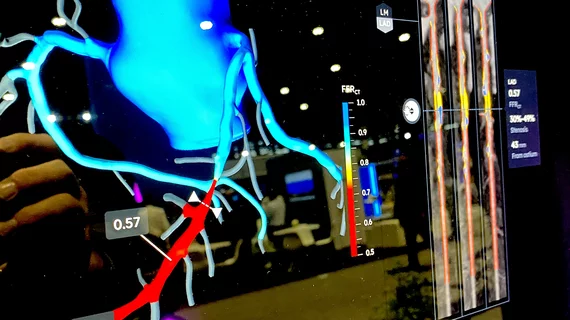
Providers utilize business intelligence to monitor referral patterns and collaborate with clinicians who order their services. Such analytics tools have also been deployed in the specialty to improve productivity, track patient satisfaction and bolster quality.

These third-party marketers earn commissions from their insurer clients not only upon initial signups but also every time “their” enrollees renew without changing plans.
The agency cited free speech as its reasoning for rescinding the long-standing policy. While in place, the rule barred companies that agreed to settlements with the Securities and Exchange Commission from publicly denying allegations made by regulators.
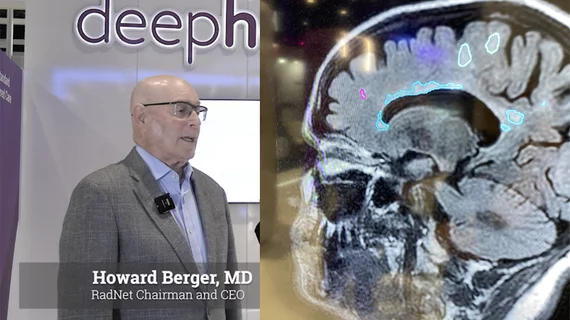
RadNet Chaiman and CEO Howard Berger, MD, explains why the company has invested tens of millions into DeepHealth to rapidly build up a new business model.
The company made the changes after its manufacturer rebates for insulin were challenged by the Federal Trade Commission. Among other shifts, Optum said 100% of all rebates will be distributed to customers by 2028.
Don’t think that you are alone if the current uncertainty in virtually all aspects of medical imaging is driving you to distraction. Today’s radiology marketplace/profession has become increasingly complex, hypercompetitive, and extremely tense; the traditional relationships are in a constant state of flux. As much as I would like to tell you that
As tensions between radiology groups and hospitals mount nationwide, in some cases leading to contract terminations, it’s increasingly critical for radiology practices to build successful relationships with the hospitals they serve. In the June issue of JACR: The Journal of the American College of Radiology, the ACR’s Task Force on Relationships
Faced with the closure of Walter Reed Army Hospital and the termination of a radiologic-pathology course that has served more than 90% of all radiology resident students, the American College of Radiology will provide this training after the Armed Forces Institute of Pathology (AFIP) runs its final course in September.
CMS has granted a reprieve to The Joint Commission (TJC), which would have required hospitals to implement cumbersome credentialing and privileging requirements for telemedicine services beginning July 15, 2010, when its ability to “privilege by proxy” expires. TJC now has until March 2011 to comply with CMS requirements, which are currently in
St Paul Radiology, Minneapolis, Minnesota, will exit a long-term agreement to provide teleradiology interpretations for NightHawk Radiology, Scottsdale, Arizona, at a price of $26 million, reports the Minneapolis StarTribune.
A new rule proposed by The Centers for Medicare and Medicaid Services to streamline the credentialing/privileging process for telemedicine could have a very different and disruptive effect if deemed applicable to teleradiology.
Anticipating that Congress will once again overrule the 21% physician pay cut scheduled to begin today, CMS has instructed its contractors to hold claims for 10 days while yet another temporary sustainable growth rate formula fix is legislated.
Drawing a line in the shifting sands of the radiology marketplace, David Engert, CEO, NightHawk Radiology Holdings, has gone public with a list of the terms under which the teleradiology company would consider providing service directly or indirectly through a practice management organization [PMO] to a hospital. Coupled with a statement of