Thomas Frieden, MD, former director of the CDC, pleaded guilty to a disorderly conduct violation after he was arrested last year for sexual misconduct, the Associated Press reported.
“Factors driving the lack of gender, racial, and ethnic diversity in radiology and radiation oncology are poorly understood,” wrote Pari V. Pandharipande, MD, MPH, Massachusetts General Hospital in Boston, and colleagues in a recent JACR study.
Whether or not its pending $68 billion purchase of Aetna gets finalized, CVS Health will pump big bucks into broadening its menu of healthcare services and personalizing them for consumers. And a key component of its plan is a data-analytics strategy steeped in AI.
Proposed rules to mitigate one of the biggest obstacles to value-based care––interoperability––and provide patients with access to their own health information for free are being met with privacy and security concerns from industry stakeholders.
Despite a sizable financial disadvantage, ST-segment elevation MI (STEMI) patients who could be treated effectively in an intensive or non-intensive care unit fare better in the ICU, according to research published June 4 in The BMJ.
The U.S. Securities and Exchange Commission (SEC) is exploring the possibility that numerous healthcare vendors, including Siemens AG, Philips NV and General Electric, may have used “local middlemen” to bribe the Chinese government and certain hospital officials, according to new reporting from Reuters.
An imaging provider from North Canton, Ohio, has been indicted for billing Medicare and Medicaid for approximately $2 million in imaging services that never actually occurred.
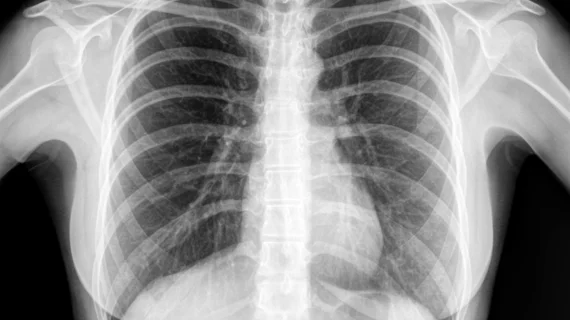
The president of Portable Radiology Services in North Canton, Ohio has been indicted for defrauding Medicare and Medicaid of nearly $2 million for billing x-ray services that were never rendered, reported Cleveland 19 News.
Electronic wearables that can monitor heart rates, steps and more vital signs are becoming more prevalent across the healthcare space, but the use of these devices is not all on the up and up. Instead of helping people stay on track with their health goals, meticulously tracking symptoms can actually sometimes make them feel worse, Wired reported.