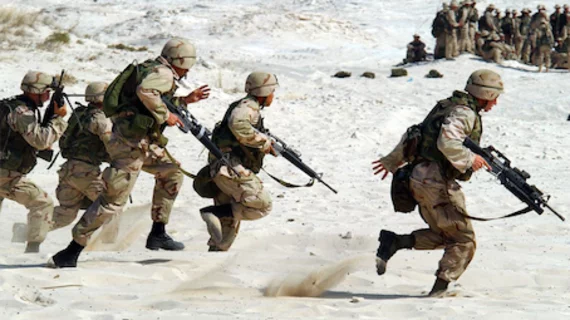
Active-duty Army personnel in the U.S. have poorer cardiovascular health than the larger civilian population, researchers have found—especially when it comes to blood pressure.
The U.S. Pharmacopeia (USP) has published a new chapter on the minimum standards required to prepare, compound, dispense and repackage both sterile and non-sterile radiopharmaceuticals associated with state-licensed activities.
A 2017 update to LI-RADS included an algorithm for hepatocellular carcinoma (HCC) screening and surveillance on ultrasound. While HCC remains the sixth most common cancer, the clinical performance of US LI-RADS for diagnosing the disease has yet to be studied.
Historically, radiology has been unable to recruit women and underrepresented minorities (URMs) as well as other healthcare specialties. Why is this the case? How can that trend be reversed?
The vast majority of healthcare executives––89%––are experimenting with emerging technologies such as AI, according to Accenture’s Digital Health Technology Vision report.
Patients with end-stage renal disease (ESRD) face higher risks of in-hospital mortality and bleeding with transcatheter aortic valve replacement (TAVR) than patients who aren’t dialysis-dependent, researchers report in the Journal of the American College of Cardiology.
Adding MRI to mammography screening for breast cancer detects more cancers, but results in more unnecessary biopsies, according to a June 4 study published in Radiology.
Arizona-based R3 Stem Cell, LLC is under fire this week after the FDA sent the company an untitled, three-page letter detailing significant shortcomings in their process.
Escape rooms have gained popularity in recent years, putting participants in a “locked” environment and seeing if they have the creativity to find their way out. Could such an experience benefit radiology residents?