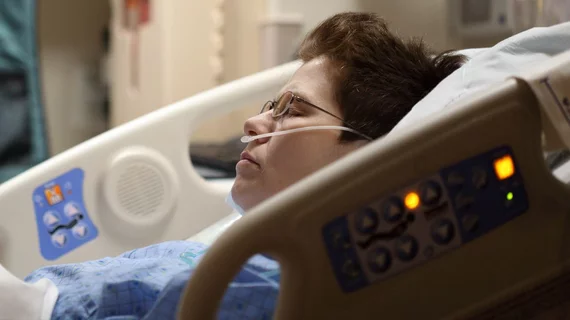
The so-called “weekend effect”—that idea that patients admitted to the hospital on Saturdays, Sundays and holidays face greater odds of readmission down the line—doesn’t apply to victims of cardiac arrest, according to data presented at the British Cardiovascular Society Conference in Manchester June 2.
The Society for Imaging Informatics in Medicine (SIIM) and American College of Radiology (ACR) are hosting a new machine learning challenge as part of a collaboration with the Society of Thoracic Radiology (STR) and MD.ai.
Prompted by a New York Times deep-dive into elevated death rates at North Carolina Children’s Hospital, North Carolina’s secretary of health on May 31 called for an investigation into the hospital’s pediatric heart surgery unit.
Nearly one million patients per year in the United States require treatment for plantar fasciitis, according to authors of a new study published in Academic Radiology.
More than two billion files—including approximately 4.4 million medical imaging files—have been exposed online across various storage technologies, according to a new report from Digital Shadows.
Brand-name drugs are likely to keep rising in price, even though the top-selling ones have been available for years and have already seen their costs skyrocket, according to a new study published in JAMA.
Aaron Williams was 16 years old when he committed suicide on the campus of his Charleston, South Carolina, high school in 2010. It was only until after the tragedy that neuroimaging revealed multiple lesions in his brain.
Facial recognition technology can be used to monitor sedated patients in intensive care units, alerting healthcare workers when a patient is at risk of accidentally removing a breathing tube or engaging in other risky behavior.
Tempus, a Chicago-based precision medicine company that uses machine learning, genomic sequencing and other AI innovations, has raised $200 million in a series F funding round, the company announced.