CMS wants to reduce the paperwork burden for the healthcare industry and is asking for stakeholder input on its initiative, Patients over Paperwork, the agency announced June 6.
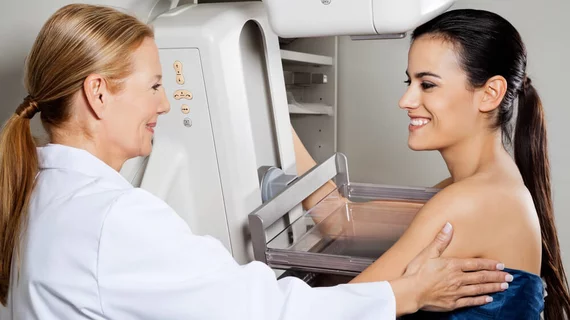
Imaging providers are implementing new and creative ways to improve breast cancer screening at their facilities, including holding special V.I.P. nights and offering services from within a shopping mall.
The American Society for Radiation Oncology (ASTRO) is championing bipartisan legislation introduced Wednesday, June 5, that would reduce prior authorization practices found to delay patient access to necessary cancer treatments.
A convolutional neural network has proven better than traditional equations, indexes and scoring systems at predicting which hospitalized patients will face readmission not long after being sent home.
The approach uses a linear electron accelerator and naturally-occurring molybdenum-100, eliminating the need for a nuclear reactor or enriched uranium.
An updated cost-effectiveness analysis of evolocumab suggests that while treatment with the PCSK9 inhibitor may always be somewhat costly, it remains effective in hard-to-treat patients and its reduced list price meets cost-effectiveness thresholds across a range of CV events in patients with very-high-risk atherosclerotic CVD.
Drugmaker Pfizer hid that one of its powerful anti-inflammatory drugs for rheumatoid arthritis therapy, Enbrel, reduced the risk of Alzheimer’s disease by 64%, according to a report by the Washington Post.
The U.S. Securities and Exchange Commission (SEC) is investigating a handful of healthcare companies over potentially using intermediaries to set up bribes with Chinese government and hospital officials to sell medical equipment, according to reporting by Reuters.







![Large peridevice leaks after left atrial appendage occlusion (LAAO) are incredibly rare and not associated with a greater risk of adverse outcomes, according to new research published in JACC: Clinical Electrophysiology.[1] Smaller residual links are more common, however, and associated with a risk of thromboembolic and bleeding events.](/sites/default/files/styles/top_stories/public/2018-08/olderpatient-doctor.jpg.webp?itok=Cv18wcDr)