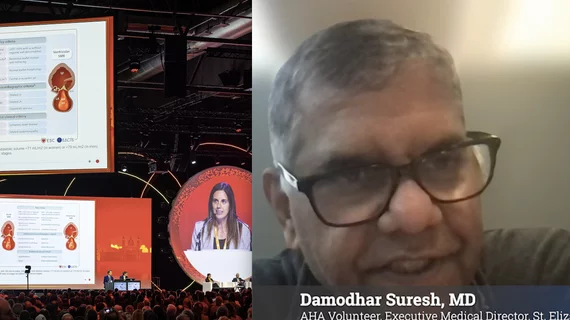
AI-based tools are here to stay, but one expert does not see them replacing cardiologists anytime soon. Look at recent trends in radiology, he says, to get a better idea of what cardiology's future may look like.
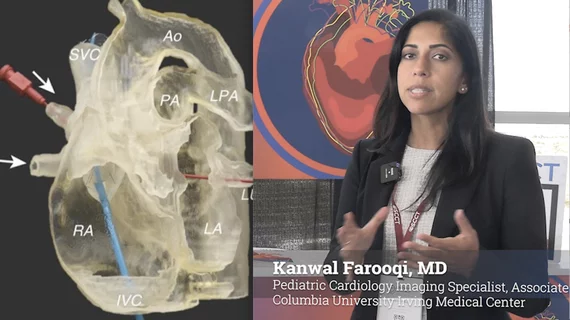
3D models can improve the visualization of challenging cardiac anatomy in addition to supporting clinical decision-making, education and procedural planning.
Biga, who originally trained as a nurse, specializes in the business side of cardiology. She also emphasized the increasing importance of AI and other new technologies.
Radiology Business Management Association (RBMA) President Christopher Crancer shared some early highlights from the group's 2024 PaRADigm annual meeting in Las Vegas. "We have a very engaged membership," he said.
Gregg Stone, MD, explains the details of the late-breaking RELIEVE-HF trial at ACC.24, where an inter-atrial shunt improved symptoms in HFrEF, but not in HFpEF patients.
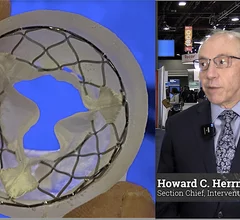
Howard C. Herrmann, MD, principal investigator of the SMART trial, discussed his team's research on self-expanding vs. balloon-expandable TAVR valves in patients with small annuli.
Interventional cardiologist Foluso Fakorede, MD, opened a practice in rural Mississippi, the epicenter of the PAD and CLI epidemic, to try and reverse the glaring health disparities in that region.
Rads should learn more about employment negotiations before signing a contract, says Seetharam Chadalavada, MD, vice chair of radiology informatics at the University of Cincinnati.