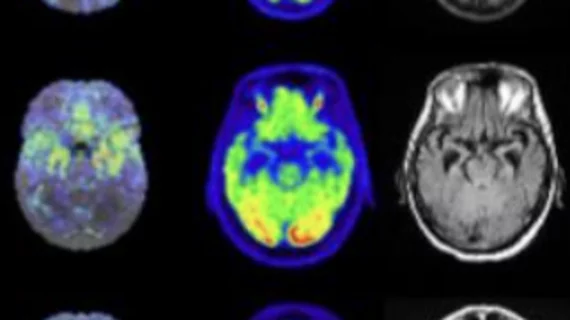
Positron emission tomography/computed tomography is a hybrid nuclear medicine imaging technique that helps radiologists spot abnormal metabolic activity. PET/CT is commonly used to diagnose cancers, heart diseases and certain brain disorders, among other conditions.

Limbic-predominant age-related TDP-43 encephalopathy, also known as LATE, was recently recognized as a type of dementia that occurs in older adults. It typically presents as memory-related cognitive decline.
Amyloid-related imaging abnormality edema is a known side effect of anti-amyloid monoclonal antibody treatments, such as Leqembi and donanemab Kisunla.
The move will make the Huntsman Cancer Institute the first academic medical center in the U.S. to produce Posluma, according to Blue Earth Diagnostics.
A comparison of the detection rates for 68Ga-PSMA PET/CT and mpMRI in low, intermediate and high-risk prostate cancer was recently shared by experts in EJNMMI.
Such scans determined the final diagnosis in 54% of patients and were more accurate than CRP and WBC levels for identifying fever origin, according to research published in Scientific Reports.
"The accuracy of PSMA-PET is essential to improve stratification and potentially outcomes both in low-risk and high-risk settings,” a doctor involved in the study explained in the Journal of Nuclear Medicine.