Diagnostic screening programs help catch cancer, abnormalities or other diseases before they reach an advanced stage, saving lives and healthcare costs. Screening programs include, lung, breast, prostate, and cervical cancer, among many others.

The COlorectal Cancer detection with AI, or COCA, model is a cost-effective, scalable solution that turns routine CT scans into opportunistic exams that can be used to proactively identify CRC.
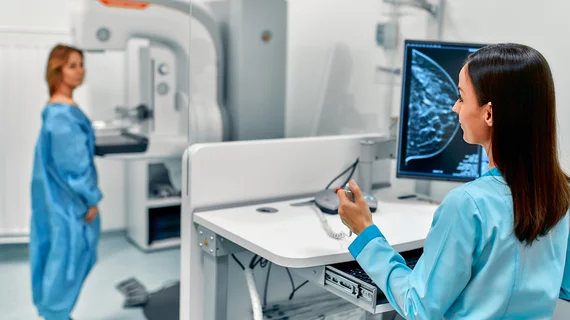
Two respected radiology organizations have issued a stark warning on the new recommendations, stating that they risk confusing patients and “may contribute to thousands of additional breast cancer deaths each year.”
New findings from a large CT lung cancer screening dataset reveal that a substantial number of patients have significant incidental findings visible on their scans.
The American College of Radiology recommends CT in most cases when diagnosing acute appendicitis, but many have begun to champion MRI as an alternative.
The first patient to undergo focused ultrasound to limit the major symptoms of Parkinson’s disease has been treated in a randomized, double-blind clinical trial, according to a Focused Ultrasound Foundation release.
Recent study findings from Massachusetts General Hospital (MGH) researchers may increase the number of stroke patients who can safely be treated with tissue plasminogen activator (tPA), or alteplase, according to an MGH release.
A sinus infection is no fun for most—but when 7-year-old Layla, a 2,300-pound black rhinoceros, was suffering from the condition, veterinarians needed a better understanding of her skull to guide treatment.
Patients who receive a false-positive breast or prostate cancer screening are more likely to continually participate in follow-up screenings, according to a study published in Cancer.
Patient navigation programs are being integrated into more healthcare systems to reduce care disparities, according to an article published online in the Journal of the American College of Radiology.
Researchers from Dundee University in Scotland have developed a new ultrasound method that may improve diagnosis and treatment options for prostate cancer, according to an April23 article by BBC News.
Neurological and psychiatric disorders may be diagnosed through functional connectivity MRI (fcMRI) by detecting differences in neural networks, according to a release from Washington University School of Medicine in St. Louis.