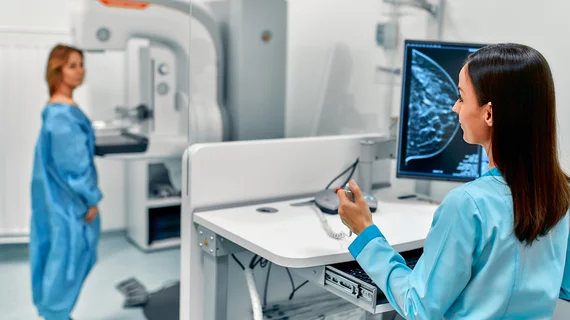
Diagnostic screening programs help catch cancer, abnormalities or other diseases before they reach an advanced stage, saving lives and healthcare costs. Screening programs include, lung, breast, prostate, and cervical cancer, among many others.

New research could provide useful information for cancer registries and potentially help policymakers better evaluate screening outcomes to develop more effective guidelines.
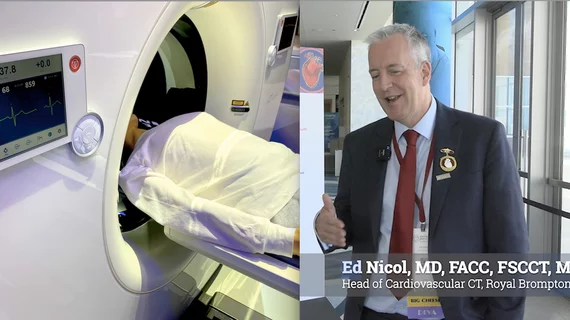
Former SCCT president Ed Nicol, MD, knows there has been interest in the potential of automated CT exams. However, he isn't so sure they are possible at this point in time for a number of reasons.
The updated LR-5 criteria for Liver Imaging Reporting and Data System (LI-RADS) version 2018 can improve sensitivity for diagnosing small hepatocellular carcinomas (HCC) compared to LI-RADS 2017.
Nearly one million patients per year in the United States require treatment for plantar fasciitis, according to authors of a new study published in Academic Radiology.
The researchers looked at 73 eligible studies consisting of 3,930 malignant and 2,861 benign lesions that evaluated the diagnostic performance of DWI, diffusion-tensor imaging (DTI) and intravoxel incoherent motion (IVIM) in the breast.
CT colonography (CTC) achieved a similar positive predictive value (PPV) as colonoscopy during colon cancer screening and can help clinicians care for patients by specifying the nature of exam findings, according to a new study published in the American Journal of Roentgenology.
Rectal cancer patients given a “good prognosis” on MRI may be able to avoid preoperative chemoradiotherapy (CRT), a technique commonly associated with long-term adverse outcomes, according to results of a new study published in JAMA Oncology.
Combining digital breast tomosynthesis (DBT) with digital mammography (DM) can spot additional lesions in patients with breast cancer, reported authors of a recent study published in Radiology. However, the combined method did have limitations.
The American College of Physicians (ACP) now recommends women undergo mammography every other year, beginning at age 50. The new guidelines have drawn criticism from the American College of Radiology and Society of Breast Imaging.