Stories about physicians and other healthcare professionals involved in lawsuits—as either a plaintiff or a defendant—or accused of breaking the law. Various legal updates or unusual stories in the news may land here.

The shiny Tesla Cybertruck cost $100,000. Its owner, Kevin Curry, 64, was convicted by a federal jury for his role in orchestrating a kickback scheme to defraud the military healthcare program. He awaits sentencing.
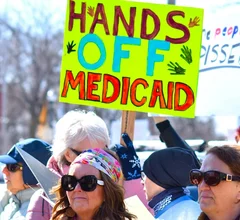
Five beneficiaries of the safety-net healthcare program have sued with the support of the National Health Law Program. They are joined by prestigious industry lobbies, including the American Academy of Pediatrics.
Plaintiffs allege Anne Arundel Medical Center in Maryland, the target of the data breach, had a server containing unencrypted patient data that hackers were able to access during the breach. The hospital and its parent health system are still recovering from the incident.
In a complaint, a California doctor accused his former employer and colleagues of making false statements to damage his reputation. The hospital argued, successfully, that the internist failed to exhaust internal dispute resolution procedures that could have stopped him from losing income.
The judge did not rule that Cigna was justified in refusing to pay but did agree that, under provisions of the NSA, federal courts have no right to compel payments.
The case dates to April 11, 2021, when 41-year-old Ruchi Sharma, living in Iowa City at the time, visited the University of Iowa Health Care ER following a head-on car collision.
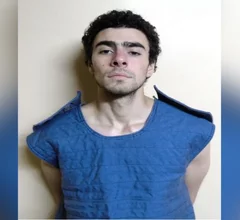
In admitting to killing Brian Thompson, 28-year-old Luigi Mangione explained his motivation and revealed new details about how he gained access to the insurance CEO.
The ruling is a blow to insurance companies that were previously allowed to include “ghost rates” in reimbursement benchmarks. The court ruled that policy, put in place by HHS and other agencies, is unlawful.
The lawsuit touches on the common complaint of third-party tracking code being used on websites that in some cases captures sensitive information in patient portals and search forms. UCHealth denies the allegations.
The shift in prosecutorial focus is part of a new enforcement policy to address healthcare fraud. The U.S. Department of Justice alleges the CEO of CampusEye paid kickbacks to doctors for referrals, going on to bill Medicare for unnecessary tests.
A U.S. District Court judge ruled that the states were unable to show they would be irreparably harmed by complying with the policy, as the Centers for Medicare & Medicaid Services is covering 90% of the associated costs.
“Although notification laws may raise awareness, insurance coverage may be necessary to translate awareness into action,” experts charge in a new analysis.