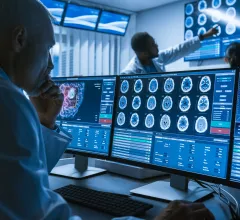
Enterprise Imaging

Enterprise imaging brings together all imaging exams, patient data and reports from across a healthcare system into one location to aid efficiency and economy of scale for data storage. This enables immediate access to images and reports any clinical user of the electronic medical record (EMR) across a healthcare system, regardless of location. Enterprise imaging (EI) systems replace the former system of using a variety of disparate, siloed picture archiving and communication systems (PACS), radiology information systems (RIS), and a variety of separate, dedicated workstations and logins to view or post-process different imaging modalities. Often these siloed systems cannot interoperate and cannot easily be connected. Web-based EI systems are becoming the standard across most healthcare systems to incorporate not only radiology, but also cardiology (CVIS), pathology and dozens of other departments to centralize all patient data into one cloud-based data storage and data management system.


Thumbnail

Referring providers want virtual consultations with radiologists

Virtual consultations help diminish the effects of reading room “chaos” owed to frequent interruptions, which can occur up to 27 times per hour for radiologists.

Computer

AI program ChatGPT now has a published article in Radiology—is it any good?

The human author reviewing the article wrote about the benefits and inherent risks of utilizing AI in a medical publication setting, concluding that, overall, it could be “a powerful tool” used in the future of medical publishing—when used with caution.

Brent Savoie, MD, JD, vice chair for radiology informatics, section chief of cardiovascular imaging, Vanderbilt University, explains who will get sued when there is a misdiagnosis due to artificial intelligence (AI).

VIDEO: Who gets sued when radiology AI fails?

Brent Savoie, MD, JD, vice chair for radiology informatics, section chief of cardiovascular imaging, Vanderbilt University, explains who will get sued when there is a misdiagnosis due to artificial intelligence (AI).

Example of a cardiovascular information system (CVIS) cath lab reporting module with a coronary tree model that will auto complete sections of the report based on how the cardiologist modifies the model. Image from the ScImage booth at ACC 2022. Photo by Dave Fornell

VIDEO: 4 key trends in cardiovascular information systems, according to Signify Reseach

Signify Research shares the latest big trends in cardiovascular IT systems, including the role of EMR cardiology modules vs. third-party CVIS, structured reporting, integration into enterprise imaging and inclusion of ambulatory surgical centers. 

Portable orthopedic tomosynthesis cleared for U.S. sales

The FDA has cleared U.K.-based Adaptix to market a 3D X-ray system that, according to the company, images hands, feet and elbows “at a fraction of the radiation dose and per-study cost of traditional CT.”

AI helps reading-room radiologists differentiate colon cancer from diverticulitis

The model augmented and significantly improved diagnostic performance for abdominal subspecialists as well as residents—a result researchers say has major clinical implications.

6 pointers on POCUS leadership in the ED (and potentially beyond)

Has point-of-care ultrasound outpaced hospitals’ capacity to incorporate the technology without anointing any particular specialty its proper guardian? The case could be made.

The key to AI integration? Keeping it straightforward, says GE HealthCare CMO

“To drive adoption, it is important that the technology designed to help productivity doesn’t add more work and complexity,” Dr. Mathias Goyen, Chief Medical Officer for Europe, the Middle East and Africa (EMEA) at GE HealthCare, told Health Imaging.