
More Articles

Researchers at Florida Atlantic University’s College of Engineering and Computer Science have developed an algorithm that can identify precise internal targets for ablation in atrial fibrillation patients—the first, they say, that can…

A high intake of grapefruit juice—and other dietary flavonoids found in fruits, vegetables, tea and wine—could correspond to QT interval prolongation in healthy individuals and those with heart disease, leaving them vulnerable to…

A trio of studies presented at the Heart Rhythm Society’s 40th annual scientific sessions earlier this month highlight significant disparities in patient access to implantable cardiac devices—particularly in women and black patients.…

The FDA is updating azithromycin drug labels to reflect evidence that the medication can contribute to a rare heart rhythm abnormality known as torsades de pointes.
The safety of azithromycin, an antibacterial drug…

The Heart Rhythm Society issued a first-ever…

South Korean researchers are working on packing the ability to monitor heart health and detect signs of atrial fibrillation into what might be the smallest cardiology wearable to date: a “smart ring.”
The proposed…
BioCardia’s AVANCE steerable introducer family has received FDA 510(k) clearance, the company announced May 8.
The AVANCE family, according to a…

Research presented at the Heart Rhythm Society’s 40th annual scientific sessions in San Francisco May 7 suggests heart patients with implanted electronic devices know less about their therapies than they think they do.
…The FDA issued an alert May 7 warning patients with certain…
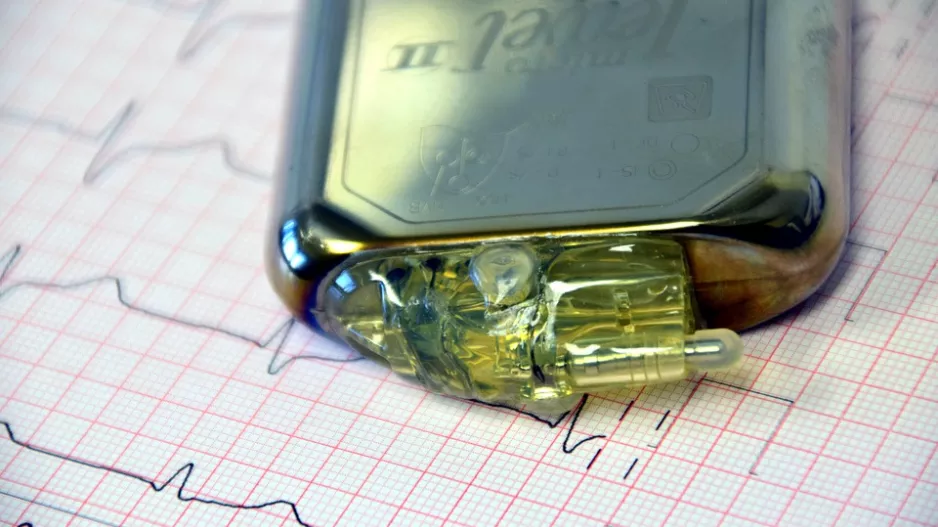
Individuals with heart failure with preserved ejection fraction (HFpEF) and atrioventricular block might benefit more from cardiac resynchronization therapy (CRT) than conventional right ventricular (RV) pacing, according to research…

The FDA on May 1 announced it cleared Medtronic’s Attain Stability Quad MRI SureScan left heart lead for commercial use in the U.S.
The Attain Stability Quad lead is the only active-fixation left heart lead on the…

The Heart Rhythm Society (HRS) is leveraging timing and location for its 2019 scientific sessions. The May 8-11 conference will be held in San Francisco, a venue that enabled the program committee to tap…
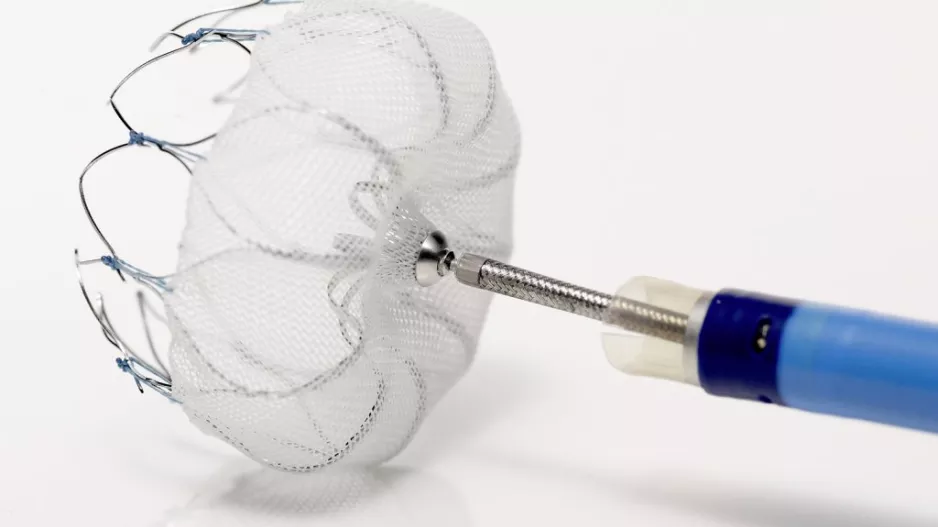
Left atrial appendage (LAA) closure with the Watchman device was associated with low rates of stroke and bleeding events in high-risk atrial fibrillation patients over a two-year follow-up period, according to a real-world…

An animal study published in Experimental Neurology suggests recovery from cardiac arrest is inhibited by exposure to white light—the same kind that normally illuminates hospital…
Compared to warfarin, all direct oral anticoagulants (DOACs) were associated with fewer cardiovascular events including heart attacks and strokes in a study…
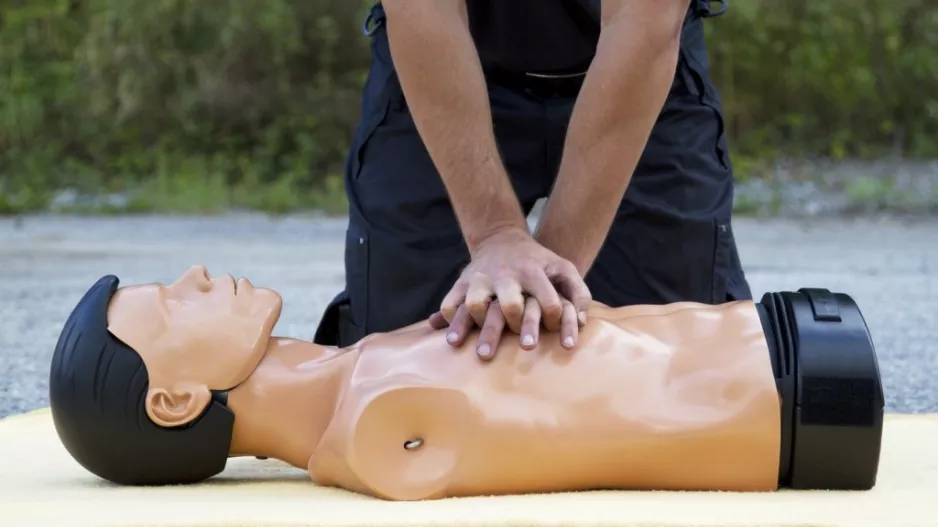
The proportion of out-of-hospital cardiac arrest (OHCA) patients in Sweden who received bystander CPR increased by 27.4 percent over an 18-year period, according to a new…
A new AI software can quickly and accurately determine the manufacturer and model of a cardiac rhythm device from an x-ray, possibly speeding up treatment when the devices fail.
More than 1 million people are implanted with pacemakers,…
A mesh envelope embedded with antibiotics cut the risk of major device-related infections by 40 percent when placed around cardiac implantable electronic devices (CIEDs) like pacemakers and defibrillators, researchers reported in the …
A catheter ablation protocol for atrial fibrillation (AFib) including only “the bare essentials” of the procedure delivered similar outcomes as a more involved strategy featuring pulmonary vein mapping, according to research presented at EHRA…
NEW ORLEANS — An antithrombotic regimen of apixaban plus a P2Y12 inhibitor such as clopidogrel lowered bleeding events and hospitalizations compared to warfarin plus clopidogrel in a cohort of patients with atrial fibrillation (AFib) and a recent…

The Apple Watch’s FDA-cleared electrocardiogram (ECG) feature has already helped some people uncover undiagnosed atrial fibrillation, leading to necessary medical treatment. But cardiologists fear false positives may be the more common occurrence…