'Concerning' CT findings may lead to unnecessary hospitalization in PE patients

COVID causes increase risk of clotting. Example of a pulmonary embolism. CT pulmonary angiograms in a 77-year-old man with COVID-19 and a saddle embolus to pulmonary arteries (black arrow in A) extending into right and left pulmonary arteries (white arrows) in (A, B) axial and (C) coronal planes. Arrowheads show pulmonary changes associated with COVID-19 and possible lung infarction (black arrow in C). (D) Axial image at the level of the ventricles shows right-sided heart strain. RSNA. COVID PE

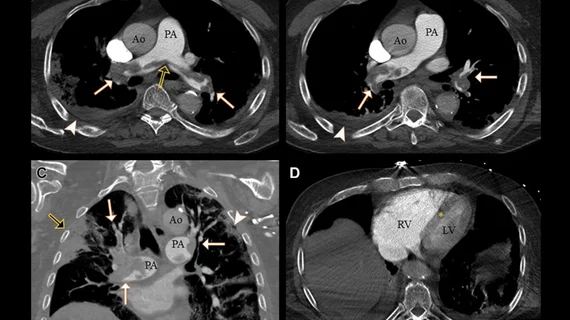
COVID causes increase risk of clotting. Example of a pulmonary embolism. CT pulmonary angiograms in a 77-year-old man with COVID-19 and a saddle embolus to pulmonary arteries (black arrow in A) extending into right and left pulmonary arteries (white arrows) in (A, B) axial and (C) coronal planes. Arrowheads show pulmonary changes associated with COVID-19 and possible lung infarction (black arrow in C). (D) Axial image at the level of the ventricles shows right-sided heart strain with interventricular septal flattening (*). Ao = aorta, LV = left ventricle, PA = pulmonary artery, RV = right ventricle. Image courtesy of RSNA. Read more.


CT findings that have historically been deemed as concerning relative to PE might not hold as much weight when it comes to associated risks as previously thought, new analysis suggests.

Folate-based radiopharmaceuticals could improve detection of gliomas

folate-based radiopharmaceuticals

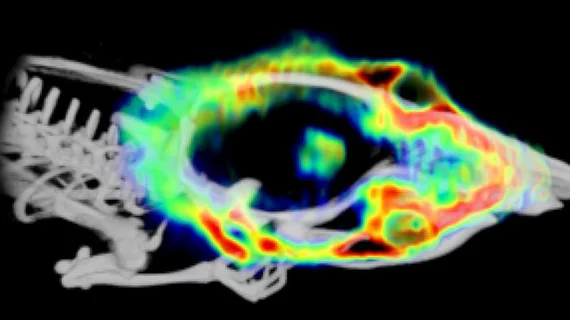
Fluorine-18-labelled folate PET/CT 3D fusion image of a rat subject with a glioma visible in the central region of the brain. Credit: Maxwell Miner, UNIVERSITY OF TURKU.

According to new research, gliomas—a deadly group of brain tumors that are difficult to treat—have increased folate receptor expression, meaning they also show increased uptake of folate-based radiopharmaceuticals on PET imaging.