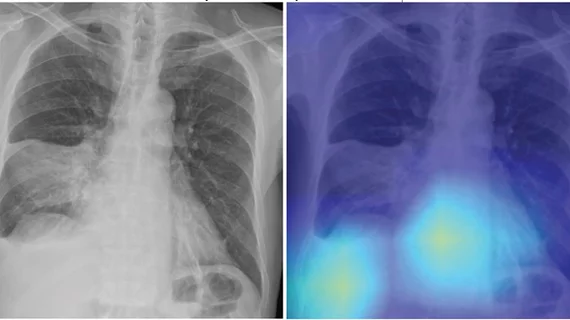
A figure from the study shows a chest radiograph with an area of consolidation involving right lower lung consistent with pneumonia, as well as right pleural effusion. The deep-learning model predicted risk of 30-day mortality of 9%. Right: Gradient-weighted class activation map shows model prediction influenced by separate area of image corresponding with heart and liver (yellow and light blue colors). Patient’s CURB-65 score was 4. Patient recovered from pneumonia and remained alive 14 months after pneumonia diagnosis.
AI was able to predict 30-day mortality risk predictions more accurately that the current risk assessment.
As a source of patient information, human-authored SIRweb.org beats ChatGPT on readability and, in a word, helpfulness. However, the website needs work on those scores too.