Radiologists are burned out—that’s no secret. Minimizing distractions and organizing time can help radiologists become more efficient and reduce those symptoms of burnout, according to a recent study published in Current Problems in Diagnostic Radiology.
The brains of war veterans who have suffered blast-related mild traumatic brain injury (mTBI) appear to ward off long-term memory loss by changing connectivity across multiple regions, according to a pilot study published online Dec. 5 in Brain Imaging and Behavior.
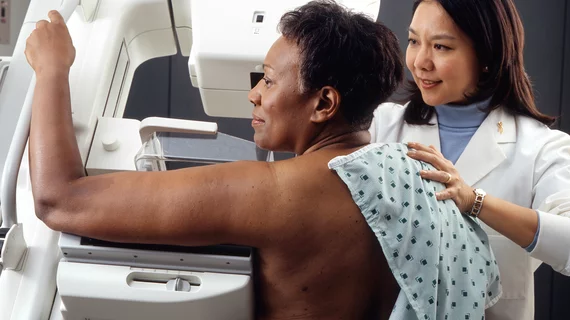
The Canadian Task Force on Preventive Health Care has issued updated breast cancer screening recommendations for women ages 40 to 74 who are not at an elevated risk, publishing them in the Canadian Medical Association Journal. The new guideline emphasizes the importance of women making screening decisions with their healthcare providers.
Receiving the flu vaccine could improve cardiovascular and all-cause mortality outcomes in patients with heart failure, according to a large-scale study of Danish citizens published Dec. 10 in Circulation.
About 1 in 8 patients who received endovascular thrombectomy (EVT) for acute ischemic stroke during a two-year period in the U.S. were readmitted to the hospital within 30 days, according to an analysis of the Nationwide Readmissions Database published in JACC: Cardiovascular Interventions.
With medical error being a top cause of death in the United States, medical record mistakes can be a big deal. When one college student tried to fix an error in her record, she discovered doing so was an uphill battle, CNBC reported.
A convolutional neural network (CNN) can detect and measure cerebral aneurysms in magnetic resonance angiography (MRA) images, according to findings published in the Journal of Digital Imaging.
The Right Scan Right Time patient and survivor community network of the Medical Imaging and Technology Alliance (MITA) met with Senators at Capitol Hill last week urging for permanent repeal of the medical device tax, according to a recent MITA news release.
Revamped guidelines on screening for breast cancer promote shared decision-making between women and their doctors. The new instructions were released by the Canadian Task Force on Preventative Health Care and published in the Canadian Medical Association Journal.