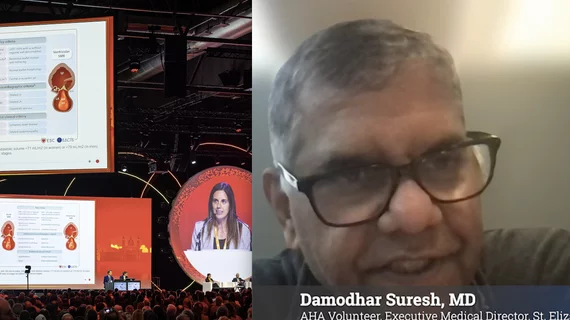
AI-based tools are here to stay, but one expert does not see them replacing cardiologists anytime soon. Look at recent trends in radiology, he says, to get a better idea of what cardiology's future may look like.
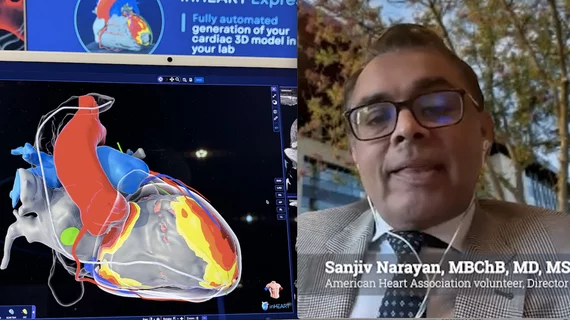
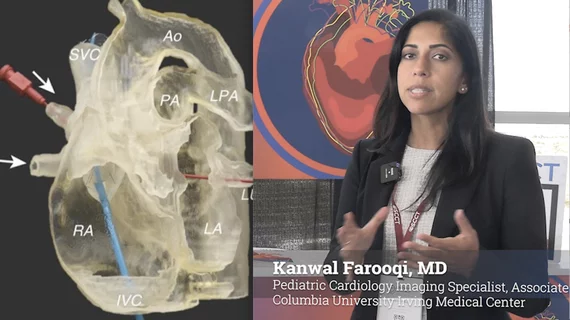
3D models can improve the visualization of challenging cardiac anatomy in addition to supporting clinical decision-making, education and procedural planning.
Kirk Garratt, MD, medical director of the Center for Heart and Vascular Health, ChristianaCare, and a past president of SCAI, explains what this shortage means for interventional cardiologists.
Randall Thompson, MD, immediate past president of the American Society of Nuclear Cardiology (ASNC), explains two key advances in cardiac nuclear imaging.
Terry Bowers, MD, director of vascular medicine at Beaumont Hospital and national co-chair of the Pulmonary Embolism Research Collaborative (PERC), explains the trend toward creating pulmonary embolism (PE) response teams that include cardiology.
American College of Cardiology (ACC) President Edward T. A. Fry, MD, of the Ascension St. Vincent Hospital in Indianapolis, discusses the first in-person ACC meeting in three years and the impact of COVID-19 on cardiology practice.
Radiology practice leaders who begrudge requests for parental and medical leave—if any such leaders are still extant in 2022—received a bracing wakeup call in late April.
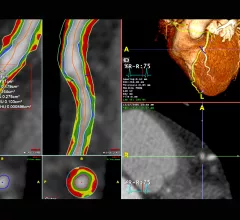
Leslee Shaw, PhD, director of The Blavatnik Family Women’s Health Research Institute, Mount Sinai Hospital, New York, explains how cardiac computed tomography (CT) can be used to assess coronary plaques.