AI-based tools are here to stay, but one expert does not see them replacing cardiologists anytime soon. Look at recent trends in radiology, he says, to get a better idea of what cardiology's future may look like.
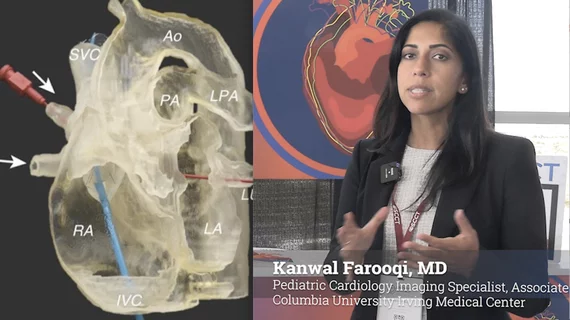
3D models can improve the visualization of challenging cardiac anatomy in addition to supporting clinical decision-making, education and procedural planning.
Keith J. Dreyer, DO, PhD, FACR, American College of Radiology (ACR) Data Science Institute Chief Science Officer, explains 5 developments to watch for in radiology artificial intelligence (AI).
Society of Cardiovascular Computed Tomography (SCCT) President Brian Ghoshhajra, MD, explains the vascular imaging sessions at SCCT 2022 that went beyond the usual coronaries and structural heart evaluations.
Brijeshwar Maini, MD, structural heart cardiologist, national and Florida medical director of cardiology, Tenant Health, explains what hospitals need to build a structural heart program and develop a heart-team care collaboration approach.
Society of Cardiovascular Computed Tomography (SCCT) President Brian Ghoshhajra, MD, detailed three challenges he is making to SCCT members in the coming year.
Ahmad M. Slim, MD, associate professor of medicine with the University of Washington and regional chief medical officer with the Pulse Heart Institute, explained how imagers get paid for coronary computed tomography angiography (CCTA) exams.
Ron Blankstein, MD, associate director of the cardiovascular imaging program and director of the cardiac computed tomography program for Brigham and Women's Hospital, was a co-author on the ACC 2021 Chest Pain Guidelines, which now lists coronary computed tomography angiography (CCTA or CTA) as a 1A level recommendation for frontline imaging.
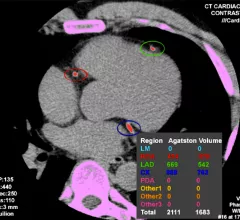
Mike Shapiro, DO, MD, director of the Center for Prevention of Cardiovascular Disease at Wake Forest University, discusses the current guidelines for computed tomography (CT) calcium scoring as a screening test to assess heart attack risk.




![Ron Blankstein, MD, MSCCT, associate director, cardiovascular imaging program, director, cardiac computed tomography, Brigham and Women's Hospital, and professor of medicine, Harvard Medical School, was a co-author on the ACC 2021 Chest Pain Guidelines,[1] which now lists coronary computed tomography angiography (CCTA or CTA) as a 1A level recommendation for front line imaging. He gave an overview of the guidelines during the 2022 Society of Cardiovascular CT (SCCT) meeting in July. #SCCT2022](/sites/default/files/styles/240x220/public/2022-07/rob_blankstein_video_interview_slide.jpg.webp?itok=o_z0Rfln)