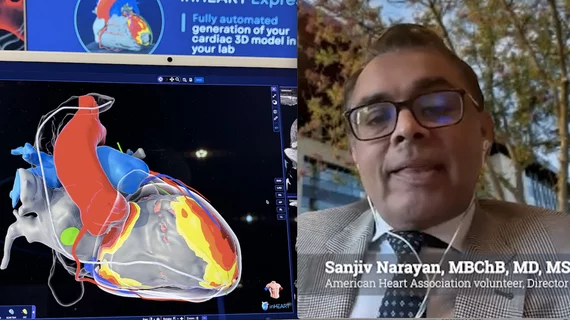
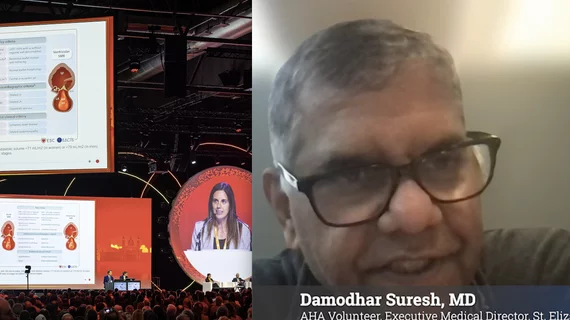
AI-based tools are here to stay, but one expert does not see them replacing cardiologists anytime soon. Look at recent trends in radiology, he says, to get a better idea of what cardiology's future may look like.
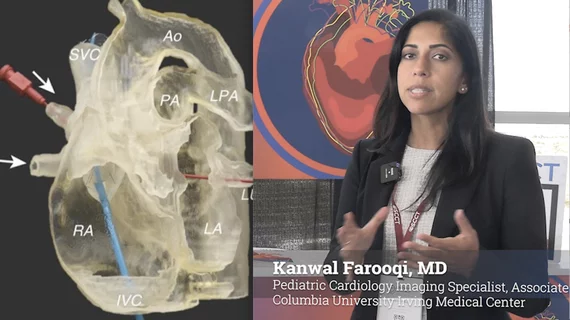
3D models can improve the visualization of challenging cardiac anatomy in addition to supporting clinical decision-making, education and procedural planning.
After their proposal for a new American Board of Cardiovascular Medicine was shot down earlier this year, cardiology groups have asked the AMA for some support. "We feel like it's time for us to blaze our own path," one specialist explained.
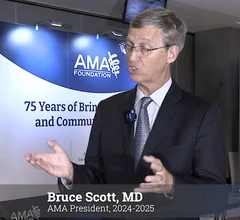
American Medical Association President Bruce Scott, MD, explains the growing issues with insurance prior authorization impacting patient care and what the AMA is doing about it.
Janet Wei, MD, examined the key differences between men and women when it comes to cardiovascular disease. These differences, she said, highlight why female patients need their very own treatment guidelines.
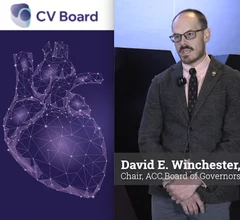
American College of Cardiology Board of Governors Chair David E. Winchester, MD, MS, examines the many benefits of working with the American Medical Association House of Delegates to bring about significant change.
SCAI and other healthcare groups want changes made to how healthcare providers are paid after performing office-based lab procedures. "As much as we love delivering care as doctors, if we are losing money doing something, we cannot sustain it," one cardiologist explained.
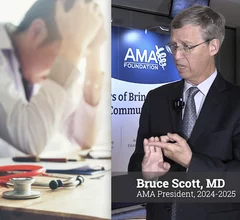
American Medical Association President Bruce Scott, MD, explains some of the key issues facing physicians, including burnout, growing medical staffing shortages, doctors leaving rural areas, increasing patients and declining Medicare payments.
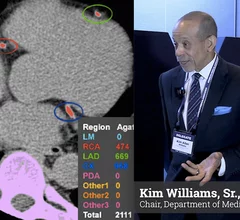
Former American College of Cardiology president Kim Allan Williams, Sr., MD, an ACC delegate to the American Medical Association House of Delegates, discusses an AMA resolution aimed at improving public awareness of low-dose CT lung cancer exams that can screen for coronary artery calcium at the same time.
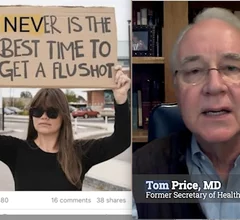
Tom Price, MD, an orthopedic surgeon and secretary of Health and Human Services (HHS) during the first Trump administration, says misinformation and growing distrust of healthcare workers and institutions is negatively impacting healthcare and more needs to be done to combat it.