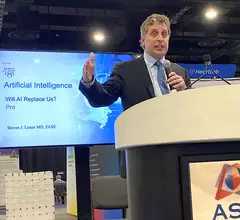
AI-based tools are here to stay, but one expert does not see them replacing cardiologists anytime soon. Look at recent trends in radiology, he says, to get a better idea of what cardiology's future may look like.
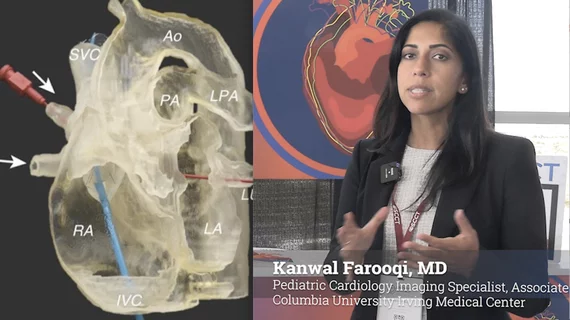
3D models can improve the visualization of challenging cardiac anatomy in addition to supporting clinical decision-making, education and procedural planning.
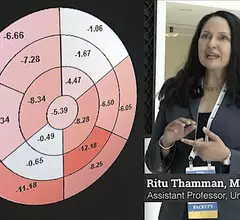
Strain imaging has gained considerable momentum in recent years as an effective tool for getting more value out of heart evaluations. Ritu Thamman, MD, provided an in-depth look at the latest trends in strain echocardiography in an exclusive interview.
"I think everyone would agree that the current fee-for-service model is not working appropriately and there needs to be a fix," regulatory consultant Denise Garris explained in a new interview.
Jackie Sohn, DO, discussed how POCUS is now incorporated into fellowship training programs and the different ways these handheld and smaller cart-based systems are being utilized in hospitals.
Purvi Parwani, MD, discussed the trend toward multimodality imaging for heart failure management. All modalities have their own weaknesses, she explained.
Steen Dalby Kristensen, a cardiologist with Aarhus University Hospital in Denmark, detailed some of the hottest topics at the European Society of Cardiology's annual meeting.
American Society of Echocardiography (ASE) President Stephen Little, MD, says there will be an increasing need for interventional echocardiographers in the near future.