Medical Imaging

Physicians utilize medical imaging to see inside the body to diagnose and treat patients. This includes computed tomography (CT), magnetic resonance imaging (MRI), X-ray, ultrasound, fluoroscopy, angiography,  and the nuclear imaging modalities of PET and SPECT. 

Thumbnail

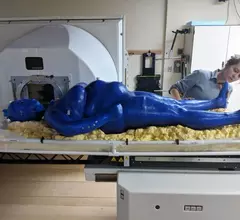
Novel 3D-printing technique generates full anatomical models from MRI, CT scans

A 3D-printing technique originated at Harvard University allows clinicians to produce highly detailed models of human anatomy in less than an hour—for a fraction of the cost and labor needed for a lower quality product, researchers reported in 3D Printing and Additive Manufacturing this month.

Thumbnail

Is digital tomosynthesis or ultrasonography best for diagnosing urolithiasis?

Currently, unenhanced multi-detector computed tomography (MDCT) is considered the gold standard for detecting kidney stones, however the modality also delivers the highest radiation dose among imaging methods.

Thumbnail

Konica Minolta to introduce workflow management tool at SIIM 2018

Konica Minolta Healthcare Americas is introducing a new worklist feature, Turn-Around-Time (TAT), for its Exa platform at the SIIM 2018 Annual Meeting May 31-June 2 in National Harbor, Maryland.

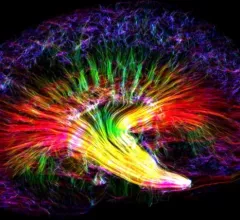
Amplified MRI captures brain movement in conjunction with heartbeat

Novel technology known as phase-base amplified MRI is the first to capture the brain’s movement in conjunction with a heartbeat, opening the door for earlier detection of brain disorders and abnormalities, researchers from Stanford University and the University of Auckland announced this week.

ACS recommends beginning colorectal cancer screening at age 45

New guidelines from the American Cancer Society suggest beginning colorectal cancer (CRC) screening at age 45, instead of the current recommendation starting at age 50.

Thumbnail

New imaging technique magnifies brain pulsing with heartbeat, may identify concussions early

A new imaging technique may assist researchers in understanding how the brain moves at rest and upon impact in real time, according to a news release published May 29 from the Stevens Institute of Technology in Hoboken, New Jersey.

Thumbnail

PET/MRI body imaging with full head scan identifies severe brain abnormalities

Routine body imaging with FDG PET/MRI technology provides a wealth of diagnostic information for physicians to better manage oncology patients. A study recently published in the American Journal of Roentgenology, however, suggests that not additionally scanning the entire head may lead to missing brain abnormalities.

Thumbnail

New online lung cancer screening tool places emphasis on individualized care

A team of researchers has published a free online tool to help clinicians personalize lung cancer screening decisions for patients. The team hopes to enhance patient understanding and attitudes related to cancer risk, while potentially avoiding unnecessary screenings.