Medical Imaging

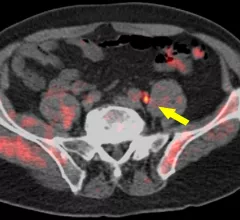
Physicians utilize medical imaging to see inside the body to diagnose and treat patients. This includes computed tomography (CT), magnetic resonance imaging (MRI), X-ray, ultrasound, fluoroscopy, angiography,  and the nuclear imaging modalities of PET and SPECT. 

Thumbnail

New radiotracers may gain ground in FDG territory

PET/CT with the radiotracer 18F-FDG may have met its match at cancer detection in two new “FAPI” tracers based on gallium-68. The acronym stands for fibroblast activation protein inhibitor, and in a recent trial the new tracers equaled or bettered FDG PET/CT on image quality, required no fasting and yielded images in less time than FDG PET/CT.

Siemens Healthineers Debuts Cardiovascular Edition of SOMATOM go.Top CT System

During the 68th Annual Scientific Session & Expo of the American College of Cardiology, March 16-18 at the New Orleans Ernest N. Morial Convention Center, Siemens Healthineers introduces the SOMATOM go.Top Cardiovascular Edition, a new version of its established computed tomography (CT) system designed to deliver personalized patient dose control in all types of routine cardiovascular imaging.

Thumbnail

What we can learn about stroke from a simple MRI technique

Using MRI scans to measure iron content can help specialists learn more about stroke-related damage to the brain, according to a new study published by Radiology. Should such measurements be required after patients suffer a stroke?

Thumbnail

Whole-body PET/CT ferrets out metastases traveling from sinonasal cancers

Whole-body PET/CT with the standard radiotracer 18F-FDG is a dependable screening tool for catching many metastases, distant as well as regional lymphatic, according to researchers at the University of Minnesota.

Thumbnail

Second-opinion reviews of breast MRI studies provide value

Second-opinion breast MRI reviews by subspecialized radiologists can improve patient management and increase cancer detection, according to findings published in the Journal of the American College of Radiology.

Thumbnail

No gadolinium, no problem: Specialists can monitor MS patients with unenhanced MRI

Gadolinium-based contrast agents (GBCAs) are typically administered during follow-up imaging of multiple sclerosis (MS) patients. According to new research published in Radiology, however, unenhanced MRI scans are sufficient.

Thumbnail

Abdominal MRI patients move less when holding breath at end of exhale

To cut respiratory motion artifacts on liver MRI, have patients hold their breath at the end of an exhale rather at the end of an inhale. That’s the recommendation of Stanford researchers after testing and comparing the two techniques, and it holds for unenhanced and contrast-enhanced scans.

Thumbnail

Experts want Ontario to change law forbidding cremation of bodies treated with radioactive therapy

In Ontario, Canada, it is illegal to cremate a patient who has received the radiation treatment brachytherapy. Radiation experts are now calling on the province to change the law, according to a report by CBC News.