Radiologists use diagnostic imaging to non-invasively look inside the body to help determine the causes of an injury or an illness, and confirm a diagnosis. Providers use many imaging modalities to do so, including CT, MRI, X-ray, Ultrasound, PET and more.

The all-cash deal is expected to be finalized in April 2026. With this divestment of its ambulatory labs, Tennessee-based Community Health Systems said it will be better able to focus on its core patient care business.
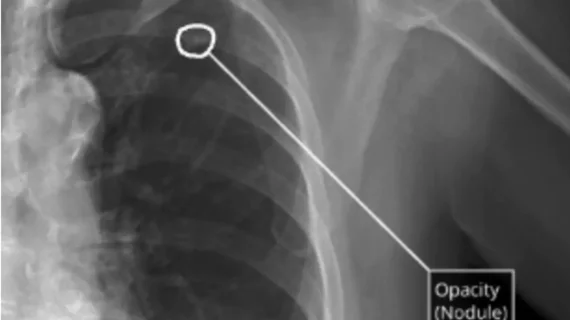
Chest X-rays could be the key to mitigating the issue of overdiagnosis in certain patient populations undergoing lung cancer screening, according to new research.
"Lp(a) represents the most important potential potential paradigm shift in cardiovascular disease prevention that we'll experience over the next five to 10 years," Seth Baum, MD, explained in a new interview.
A group of German researchers found diffusion-weighted (DW) MRI provided superior prognostic information compared to PET/CT in liver cancer patients who underwent 90Y radioembolization and proved more accurate in predicting overall survival in these patients.
Using functional MRI (fMRI), researchers from VU University Medical Center in Amsterdam found a correlation between white matter brain damage and atrophy in multiple sclerosis (MS) patients—a primary factor of cognitive impairment in patients with the disease.
New research has found fetal MRI can reliably identify holoprosencephaly as early as 18 weeks into pregnancy, providing added time for parents to understand and prepare for the condition.
Microsoft will collaborate with Case Western Reserve University in Cleveland to improve the accuracy of MRI results in less time through an approach called "magnetic resonance fingerprinting."
NASA astronauts at the International Space Station used portable ultrasound to scan each other for spinal cord changes that may occur during long-term space missions, according to a study published in the Journal of Ultrasound in Medicine.
Researchers at CalTech are developing "erasable" contrast agents that can "blink off" on command during an MRI to reveal their exact location inside the body, according to a press release from the California Institute of Technology.
Researchers from the University of Michigan may have found a way to significantly decrease MRI wait time while maintaining high image quality that can be applied to other practices, according to a study published in the Journal of the American College of Radiology.