Practice management involves overseeing all business aspects of a medical practice including financials, human resources, information technology, compliance, marketing and operations.

“From an operational perspective, these findings have implications for staffing and resource planning in emergency radiology departments serving high-tourism regions."
The product, which is offered within Elucid’s novel Plaque-IQ software suite, allows physicians to analyze lesion composition and plaque burden across any vessel.
The modality uses a high volume of linens, gels and other disposable supplies that also can have a significant global carbon footprint in radiology, experts note.
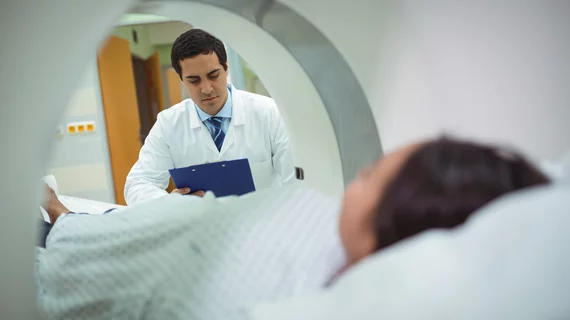
Obese patients in the U.K. are getting too big to fit into MRI scanners, which can lead to health complications after canceled exams, according to a recent article by BBC News.
Two Minnesota high school students sat down with imaging specialists to learn about the importance of the job in medicine and how to gain valuable work experience in the position.
Social media, particularly flexible platforms like Facebook, could be changing the way free medical information is circulated worldwide, according to three Johns Hopkins University researchers.
Children with attention-deficit/hyperactivity disorder (ADHD) have reduced brain volume, researchers from the Kennedy Krieger Institute have found. The fresh research continues to shed light on how ADHD functions as a biological and cognitive condition.
Two out of three women want a biopsy performed if a radiologist determines there is any chance of breast cancer, according to a new study published in the Journal of the American College of Radiology. The authors also found that women overestimate the risk of breast cancer when follow-up imaging or biopsy is recommended for low-risk mammographic abnormalities.
Digital breast tomosynthesis (DBT) can help radiologists detect more architectural distortion (AD) lesions than 2D mammography alone, according to a new study published in Radiology.
Measuring visceral fat area via CT could help stratify prognosis for women with renal cell carcinoma (RCC), and radiographic analyses could further guide therapeutic and surgical decisions, according to a study published in Radiology’s March edition.