Providers utilize business intelligence to monitor referral patterns and collaborate with clinicians who order their services. Such analytics tools have also been deployed in the specialty to improve productivity, track patient satisfaction and bolster quality.

Independence Blue Cross, the largest medical insurance provider in the Philadelphia area, does not admit to wrongdoing. It was accused in a lawsuit backed by the U.S. Department of Justice of misrepresenting the severity of patient illnesses to juice risk-adjusted Medicare payments.
With its $350M in new funding, EliseAI said it plans to build out its technology and sales force. It currently works with specialty provider groups to automate practice operations such as scheduling and insurance verification.
Of surveyed and interviewed U.S. physicians who showed significant six-month improvement in follow-up vs. baseline wellness checks, 47% attributed the gain to active personal changes. Not far behind were those who credited active work-related changes—40% of the field.
The new entity, Precure, will be owned by both groups. Its work in detecting early disease for timely intervention stems from a research project launched this summer. The Mayo Clinic said Precure will make the results of that initiative actionable.
Cigarette smoke inhibits pulmonary perfusion while nicotine-delivering vapors from e-cigarettes do the opposite, actually increasing blood flow in the lungs.
In a recent trial, medical students who were trained for two hours or less in an ultrasound “volume sweep” imaging (VSI) protocol obtained diagnostic-quality imaging of palpable breast lesions.
Konica Minolta Healthcare Americas, Inc. announced today that the company’s revolutionary Dynamic Digital Radiography (DDR) technology, enabling the visualization of anatomy in motion, will be available on the mKDR Xpress™ Mobile X-ray System.
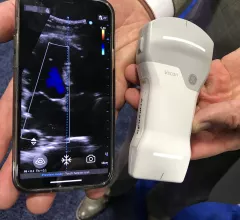
Two dozen academic physicians from around the U.S. with expertise in point-of-care ultrasound—and no vested interest in POCUS industry players—recently tested and compared four commercially available POCUS handhelds.
The FDA has greenlit a whole-body MRI machine that uses deep learning and advanced image processing to wring “elevated image quality” from a magnet with only 0.55 Tesla field strength.
Fewer than 40% of rural counties in the U.S. can offer residents any access to point-of-care ultrasound, while nearly 90% of their metropolitan counterparts have POCUS aplenty.