Providers utilize business intelligence to monitor referral patterns and collaborate with clinicians who order their services. Such analytics tools have also been deployed in the specialty to improve productivity, track patient satisfaction and bolster quality.

The buyout, announced last summer, drew the attention of federal regulators at the Federal Trade Commission, concerned that competition for ambulatory surgery services would be stifled by the merger. To appease the agency, Ascension has agreed to divest from some centers previously owned by Amsurg.
When Mayo Clinic and Microsoft announced last week that they’re partnering to develop a frontier AI model for healthcare, observers could see where Mayo’s expertise in advanced digital medicine would interest Microsoft. The Big Tech behemoth has not been coy about its healthcare ambitions.
Senate Bill 196 was signed into law by Gov. Ned Lamont a year after the state saw Prospect Medical Holdings, an investor-backed health system, fall into bankruptcy as investors extracted hundreds of millions of dollars in fees from its hospitals.
The lawsuit against Find a Black Doctor was filed by Travis Morrell, MD—a dermatologist based in Colorado—who alleges he was harmed by being excluded from the directory on the basis of race. His case has the backing of the conservative-aligned advocacy group Do No Harm.
Researchers have combined three emerging technologies to detect and classify breast cancers found in follow-up imaging of women whose recent screening mammography was deemed normal.
The National Academies of Sciences, Engineering, and Medicine have released a report estimating $100 million will be needed for each of the next 15 years to learn how exposure to low doses of radiation affect human health.
Medical experts testifying in malpractice suits for the defense tend to have higher objective indicators of erudition than peers testifying for the plaintiff. Radiologists buck this pattern.
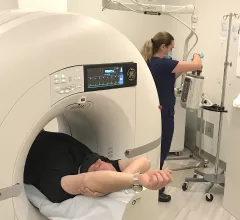
Comparing six dual-energy CT technologies marketed by three scanner manufacturers, radiology researchers have found all models helpful in determining the chemical composition of kidney stones even at substantially reduced radiation doses.
The Internet is an acceptable source of images for training algorithms to automatically triage patients with dislocated joints and similar orthopedic emergencies.