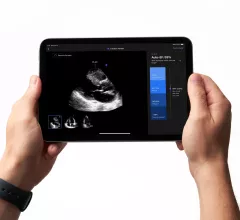
Providers utilize business intelligence to monitor referral patterns and collaborate with clinicians who order their services. Such analytics tools have also been deployed in the specialty to improve productivity, track patient satisfaction and bolster quality.

Paxton says the “woke” EHR giant is intentionally making it harder for patients and families to access historical medical data, violating state law. Epic denies the allegation.
Mark Cuban's startup Cost Plus Drugs and insurer Humana are said to be working on a deal that would allow Medicare Advantage patients to buy drugs directly from manufacturers. The terms of the agreement—which Forbes reports is in its early stages—are still unknown.
The results were shown in multiple posts on X. A clinical trial to prove the safety and efficacy of Elon Musk's brain implant is ongoing, with 12 people currently using the devices.
The all-cash deal is expected to be finalized in April 2026. With this divestment of its ambulatory labs, Tennessee-based Community Health Systems said it will be better able to focus on its core patient care business.
A Canadian manufacturer of positron emission tomography equipment has received FDA’s OK to market a small-footprint scanner that images targeted organs bearing radiotracers at close range.
A global tech and pharma vendor is set to inject U.S. healthcare with a set of generic contrast agents, the first of which will be an FDA-approved substitute for GE Healthcare’s Visipaque.
A healthcare AI startup in Silicon Valley is partnering with a top-tier medical school—and hopefully a few good radiologists—to test a hypothesis that’s increasingly crucial to radiology.
GE HealthCare will be the name of the company’s healthcare business, while its energy portfolio will go under the moniker GE Vernova, and its aviation business will be dubbed GE Aerospace.
Portable MRI maker Hyperfine is touting a new capability in its Swoop scanner that may appeal to pediatric neurologists and neurosurgeons as well as neuroradiologists.
A machine learning system for planning spine surgery that also predicts post-op spinal alignment six months out has cleared the FDA’s 510(k) review process.