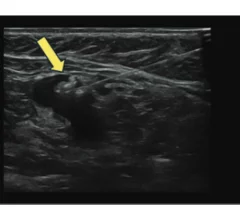
“With generative AI becoming more capable of producing remarkably convincing radiology reports, there’s a greater risk of fabricated reports being used to falsify medical histories and support fraudulent claims,” the team cautioned.
When working-age adults develop cardiovascular disease, it often ends up eating up a significant amount of their income. Are insurance companies doing enough to help these patients?
Sahil Parikh, MD, director of endovascular services, New York-Presbyterian, explains details from the big-data REAL-PE study comparing mechanical thrombectomy to ultrasound assisted catheter thrombolysis.
Abandoned metal wire leads for pacemakers and ICDs did not present a serious safety issue in a study of 80 patients, but a handful of patients did experience a significant change in the composite of capture threshold, sensing or lead impedance.
Endoscopic ultrasonography has emerged as a valuable tool for diagnosing pancreatic cancer, but its specificity in differentiating between benign and malignant pancreatic lesions varies.
Inspired by nature and funded by the European Research Council, a group of scientists and engineers thinks its new research could represent a significant breakthrough in TAVR care.
The self-expanding valve is not yet approved by the FDA, but care teams in other markets are reporting positive outcomes when patients go home the day after treatment.
That’s according to new PET imaging that shows the presence of activated T cells in the brain, spinal cord, gut and lung tissues of individuals who have recovered from COVID.