Wearable trackers found that PE patients were more active if they underwent mechanical thrombectomy than if they were just put on anticoagulation therapy alone.
Compared with postoperative stereotactic radiation therapy, an investigational intraoperative RT approach could significantly reduce local tumor recurrence and improve survival in patients with newly diagnosed operable brain metastases.
While the studies on these systems have proven them to be effective in diagnosing and treating COVID in specific cohorts, the varying settings in which they were used can make it difficult to derive definitive conclusions on their efficacy.
A new study utilizing multi-organ MRI scans recently identified organ impairment in 62% of COVID long haulers six months after their initial diagnosis; 29% of these individuals continued to display damage in at least one organ at the 12-month mark.
Quantifiable features of medical images such as pixel intensity, arrangement, color and texture—in a word, radiomics—can help radiologists improve diagnostic accuracy.
Patients who are vaccinated at the time of their COVID-19 diagnosis appear to face a lower risk of new-onset type 2 diabetes than patients who are not vaccinated.
According to new research published in the American Journal of Cardiology, complex CAD appears to affect long-term TAVR outcomes much more for women than it does for men.
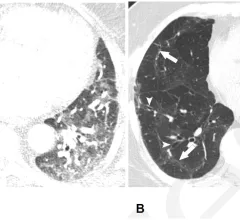
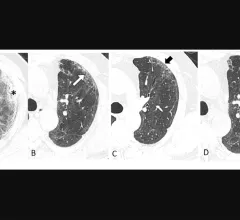
Scans on these patients show a combination of fibrosis, thickening, honeycombing, cystic changes and dilation of the bronchi, among other imaging features.
Leading stroke specialists from all over the world gathered in Dallas for the 2023 International Stroke Conference. Catch up on some of the biggest stories that came out of the three-day event.