Cardiac Amyloidosis

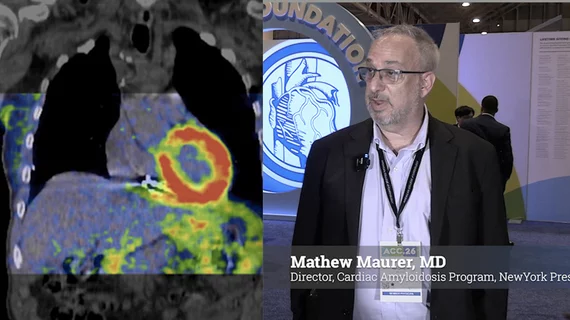
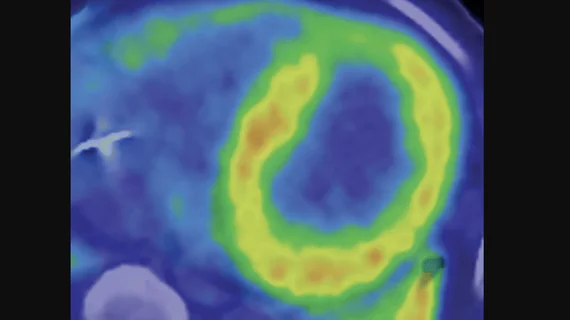
With the first drug treatments for cardiac amyloidosis recently entering the market, there has been an explosion of interest to diagnose and care for these patients. It is considered a rare disease, but many experts now say it is actually just be under diagnosed. The disease is caused by protein misfolding. Normally soluble proteins in the bloodstream become insoluble and deposit abnormally in the tissues and organs throughout the body. There are three main kinds of amyloid that affect the heart, light chain amyloid (AL) and two types of transthyretin amyloid (ATTR or TTR). The first type of ATTR is hereditary, or familial amyloid, and the second is wild type, or age-related TTR amyloid. Nuclear imaging, echocardiography, CT and MRI all play roles in diagnosing amyloid and in determining the subtype, which is required for targeted treatment. 

artificial intelligence consultation

Imaging specialists partner with Pfizer to deliver AI-powered cardiac amyloidosis evaluations

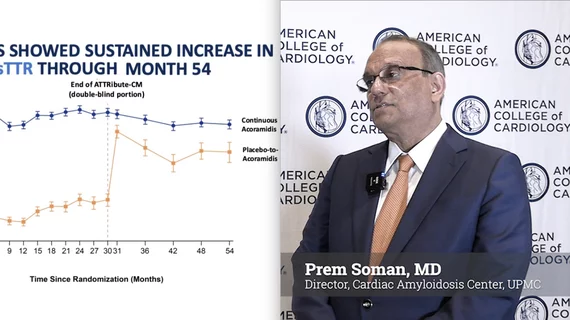
Improving care for patients with cardiac amyloidosis has emerged as one of the hottest topics in cardiology. Pfizer helped kickstart that trend in 2019 when it gained FDA approval for two separate medications for the rare, but potentially fatal disease. 

Patisiran, marketed under the name Onpattro

FDA chooses not to approve patisiran for treating ATTR cardiomyopathy

The announcement came just weeks after an FDA subcommittee voted in favor of approval. 

Video interview with ASNC President President Mouaz Al-Mallah, MD, who explains why nuclear cardiology needs to upgrade its technology to be competitive. #ASNC #ASNC2023 #ASNC23

Previewing ASNC 2023: Why nuclear cardiology needs to evolve

ASNC President President Mouaz Al-Mallah, MD, said nuclear cardiology needs to upgrade old imaging systems and embrace new technology to deliver better value for patients. 

Purvi Parwani, MD, director of echocardiography, Loma Linda University Medical Center, explains the trend where heart failure imaging guidelines are driving a rising use of mixed multimodality imaging. #ASE #ASE2023

Multimodality imaging helps cardiologists manage heart failure patients—with an assist from AI

Purvi Parwani, MD, discussed the trend toward multimodality imaging for heart failure management. All modalities have their own weaknesses, she explained. 

Roosha Parikh, MD, advanced imaging cardiologist, St. Francis Heart Hospital, Long Island, New York, and a clinical assistant professor of medicine at the State University of New York at Stony Brook, presented in one of the ASE 2023 amyloid sessions and spoke with Cardiovascular Business about the disease.

Amyloidosis now a hot topic in cardiac imaging due to new drug treatment

Advanced cardiac imager Roosha Parikh, MD, explained that cardiac amyloidosis is regularly misdiagnosed. It can often be identified in echocardiography results, however, if physicians know how to identify it. 

Stephen Little, MD, discusses trends in echocardiography at ASE 2023. #ASE23 #ASE2023 What is new in cardiac ultrasound.

Back in the spotlight: Exploring echocardiography's revival

American Society of Echocardiography President Stephen Little, MD, says several trends and technologies are coming together at once, leading to renewed interest in echo.

Roberto Lang, MD, explained the AI advances in echocardiography that will make it a requirement to have in the coming years at ASE 2023. #ASE #AIhealthcare #ASE2023

Echo labs not using AI will be left behind

Echocardiography expert Roberto Lang, MD, says artificial intelligence will be so important to cardiac ultrasound in the near future that echo labs not using it will be inefficient and less accurate than labs that do use it.

artificial intelligence robot evaluates healthcare data

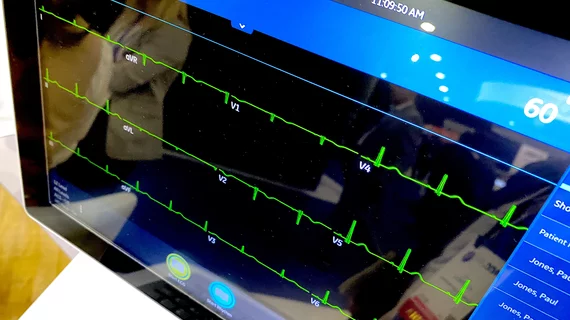
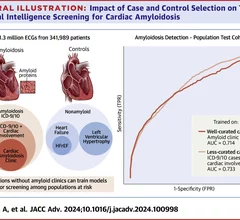
FDA grants breakthrough designation for new AI model to detect cardiac amyloidosis in ECG results

Anumana, Pfizer and Mayo Clinic all worked together to develop the advanced algorithm. The groups are now targeting full regulatory approval in the U.S., Europe and Japan.