Computed Tomography

Cardiac computed tomography (CT) has become a primary cardiovascular imaging modality in the past 20 years, and was recommended as a 1A recommendation in the 2021 chest pain assessment guidelines. CT calcium scoring has became a primary risk assessment for coronary artery disease and whether patients should be on statins. Coronary CT angiography (CCTA) is used to for anatomical assessment of the arteries for plaque burden and to identify areas of blockage that may cause ischemia and heart attacks. Additional use of contrast CT perfusion or fractional flow reserve CT (FFR-CT) can offer physiological information on the function of the heart. CT plays a primary role in structural heart assessments for heart valves, repair of congenital defects and left atrial appendage occlusion (LAAO) for both pre-procedure planning and procedural guidance. Find more news on general radiology CT use.

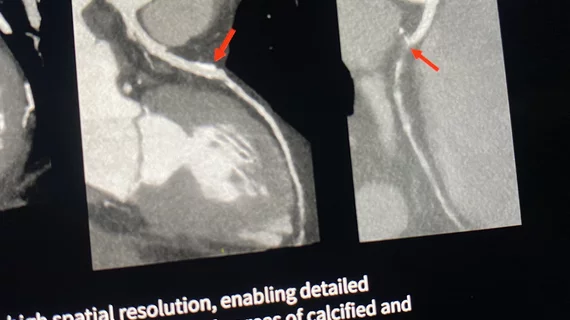
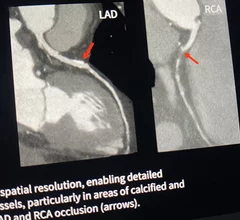
CCTA characterization of a chronic total occlusion with angiographic correlation during percutaneous coronary intervention.

CCTA brings clarity, better outcomes to CTO PCI

Researchers reviewed dozens of studies to evaluate the long-term value of using CCTA guidance to perform PCI on patients with complete blockages.

Heartflow Video

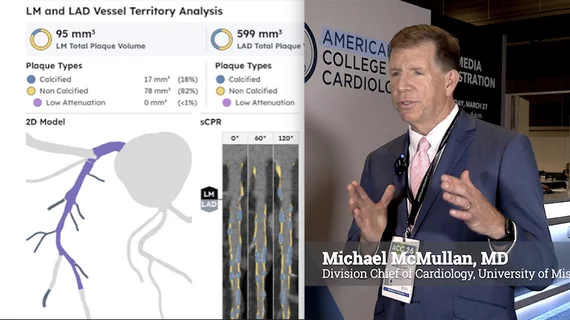
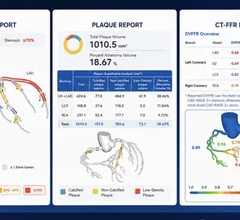
Physicians chime in: Coronary plaque staging offers more precise cardiac patient management

Sponsored by Heartflow

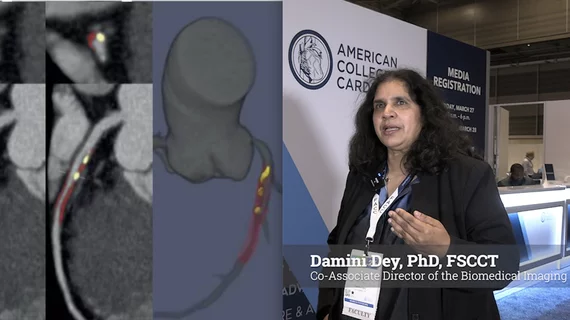
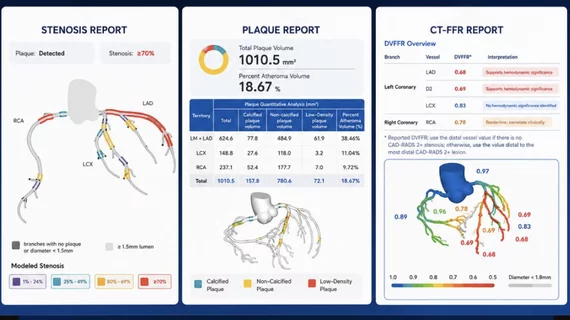
As precision cardiology continues to evolve, the integration of advanced coronary computed tomography angiography (CCTA) and AI-driven analysis is fundamentally changing how we assess and manage coronary artery disease (CAD). Here is a closer look at how Heartflow Plaque Staging is leveraging Total Plaque Volume (TPV) to stratify patient risk.

Society of cardiovascular computed tomography (SCCT) President Kavitha Chinnaiyan, MD, FACC, MSCCT, a cardiologist and professor of medicine at Oakland University William Beaumont School of Medicine in Royal Oak, with is part of Corewell Health, explains some of the key trends in coronary computed tomography angiography (CCTA) and how this is being translated into educational programming at the SCCT 2026 annual scientific meeting (ASM). #SCCT2026

SCCT President: Key trends in cardiac CT

As CCTA sees rapid adoption across cardiology, SCCT is working to address the education required to sustain the expansion.

Kimberly Hatch, RT(R)(CT)(ARRT), technical director of 3D lab at Banner Health, explains the advances in advanced visualization software what is needed to build a comprehensive cardiac 3D imaging lab.

Leveraging IT and AI to transform 3D imaging lab workflows at Banner Health

Procedure planning studies that once took hours can now be completed in just 25 minutes with 3D technology advances and AI.

Kimberly Hatch, RT(R)(CT)(ARRT), technical director of 3D lab at Banner Health, explains the advances in advanced visualization software what is needed to build a comprehensive cardiac 3D imaging lab.

Advanced AI helps 3D imaging labs evolve with the times

“Technology grows and grows,” as one lab director explained. “Our job is to keep up with it and use it in the most efficient and effective way.”

cvi42 | Plaque Circle Cardiovascular Imaging

How to implement AI-powered coronary plaque analysis software—and ensure you get paid

The use of AI to evaluate plaque buildup in CCTA images has been one of cardiology’s biggest ongoing trends. Implementing this software into existing workflows, however, can be a challenge. An upcoming webinar is focused on providing guidance to hospitals and cardiology practices hoping to learn more about this topic. 

AI lawsuit court legal

Heartflow sues cardiology AI rival Cleerly over alleged patent infringement

According to Heartflow, Cleerly's actions represent “one of the most egregious examples of piracy in the medical technology industry.” Cleerly commented on the lawsuit, defending the value and integrity of its products. 

Kathryn Berlacher, MD, MS, FACC, chair of the 2026 American College of Cardiology (ACC) 2026 Scientific Sessions, and clinical director of cardiology and a women's heart and cardio-obstetrics specialist at the University of Pittsburgh Medical Center, explains the major trend of artificial intelligence (AI) in cardiology, the use of coronary CT angiography (CCTA) for the first time at a medical meeting to scan attendees, and the rise in hands on, guideline, business and advocacy sessions.

Impactful innovations reshape learning and technology at ACC.26

ACC.26 Chair Kathryn Berlacher, MD, MS, explained some of the big trends at this year's meeting, including AI, CCTA, hands-on training and guideline sessions.