Cath Lab

The cardiac catheterization laboratory is used for diagnostic angiograms and percutaneous coronary interventions (PCI). Cath labs have also seen expanding use in recent years for transcatheter structural heart procedures. Some hospitals also share these labs with other subspecialties for catheter-based procedures in electrophysiology (EP), interventional radiology, peripheral artery disease (PAD), carotid and neuro interventional procedures and vascular surgery.

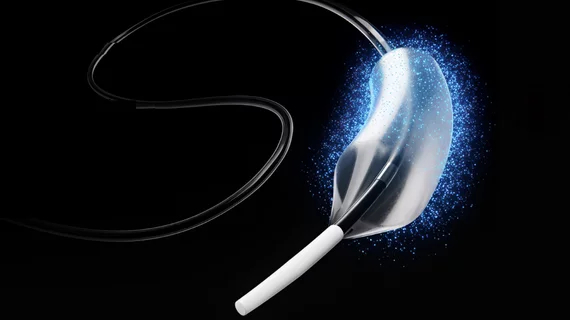
Conavi Medical’s Novasight Hybrid System catheter

FDA warns that certain coronary imaging catheters are being removed from market over safety concerns

A catheter sheath detached during use and was left in the patient’s body. It was successfully removed, but the FDA said it is now evaluating the potential risk to others going forward. There is no official recall at this time.

Family of heart patient who died awarded $45M after suing health system for negligence

The 55-year-old patient woke up experiencing chest pain one morning and an ambulance was called. He was dead just a few hours later. His family's lawsuit argued that delays in care, communication errors and other issues were directly responsible for his death.

FDA clears new device for enabling access to the heart’s surface without an exposed needle

CardioVia's ViaOne technology includes a blunt-tip needle that remains concealed to help interventional cardiologists and electrophysiologists treat cardiac arrhythmias with a reduced risk of perforation or any other complications. 

Using a left radial artery (LRA) vs. hyper-adducted right radial artery (HARRA) approach in the cath lab

Choosing left radial access in the cath lab helps cardiologists limit radiation exposure

Using a left radial artery approach in the cath lab exposes interventional cardiologists to significantly less radiation than a hyper-adducted right radial artery approach. The difference is substantial enough for researchers to declare LRA "the primary access site for cardiac catheterization."

Eric Secemsky, MD, MSc, RPVI, FACC, FAHA, FSCAI, FSVM, director of vascular intervention, Beth Israel Deaconess, section head, interventional cardiology and vascular research, Susan F. Smith Center for Outcomes Research, and associate professor of medicine, Harvard Medical School, explained some of the new bioresorbable stent scaffold technology that is being developed for use in PAD below the knee at CRT 2025.

Advances in bioresorbable stents show promise for treating PAD

Bioresorbable stents are back in the spotlight thanks to some significant progress from multiple medtech companies. Eric Secemsky, MD, discussed some of the biggest breakthroughs in this space at CRT 2025.

SCAI President James Hermiller, MD, discusses the need for more better radiation protection in the cath lab#SCAI #CathLab, #RadiationExposure #cardiology

SCAI leaders 'on a mission' to improve cath lab protection from radiation, orthopedic injury

SCAI President James Hermiller, Jr., MD, explains the need for more innovative radiation protection systems in the cath lab.

self-centering guide catheter (SCGC) for TAVR from Boston Scientific

Cardiologists are first in world to use new TAVR catheter from Boston Scientific

The new Self-Centering Guide Catheter was designed to help care teams with the retrograde crossing of the aortic valve during TAVR. Researchers evaluated the safety and effectiveness of the catheter, sharing their experience in JACC: Cardiovascular Interventions.

Shockwave Medical Javelin Peripheral IVL Catheter

Shockwave Medical launches new IVL catheter for targeting challenging lesions in PAD patients

The new-look Javelin Peripheral IVL Catheter was designed to travel through extremely narrowed blood vessels and target plaques with up to 120 pulses.