Cath Lab

The cardiac catheterization laboratory is used for diagnostic angiograms and percutaneous coronary interventions (PCI). Cath labs have also seen expanding use in recent years for transcatheter structural heart procedures. Some hospitals also share these labs with other subspecialties for catheter-based procedures in electrophysiology (EP), interventional radiology, peripheral artery disease (PAD), carotid and neuro interventional procedures and vascular surgery.

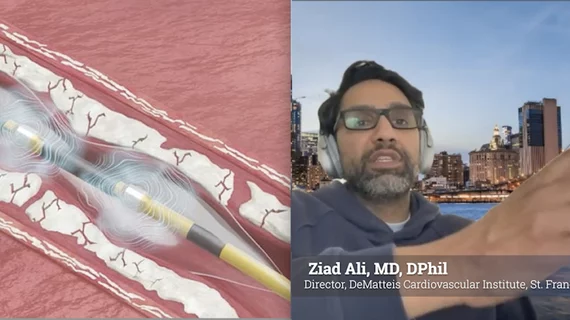
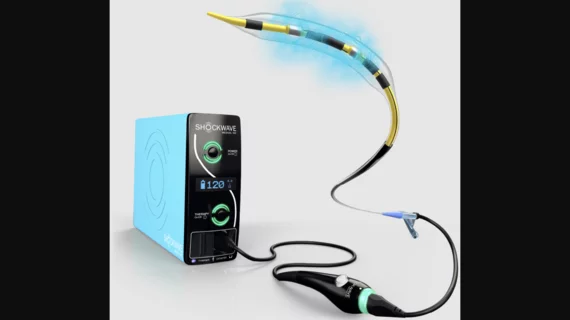
Advances in calcified coronary plaque modification are increasingly centered on intravascular lithotripsy (IVL) because the technology reduces complications such as vessel trauma and perforation associated with traditional high-pressure balloons or atherectomy techniques. Cardiovascular Business spoke with Samin K. Sharma, MD, director of the Mount Sinai Fuster Heart Hospital Cardiovascular Clinical Institute, recently about the advances in IVL. #IVL #TCT

Exploring major trends as IVL keeps evolving

Intravascular lithotripsy is expected to see even wider adoption when lower-profile catheters are introduced and device costs start to drop, explained Samin Sharma, MD.

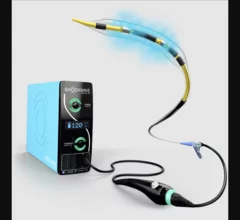
The Boston Scientific Seismiq intravascular lithotripsy (IVL) system entered commercial use in the U.S. in January 2026.

IVL competition heats up as Boston Scientific enters US market

Shockwave Medical, now a part of Johnson & Johnson MedTech, sits at the top of the IVL market, but things are starting to get more competitive. Boston Scientific gained its own IVL system when it acquired Bolt Medical in 2025.

Ryan Madder, MD, Program Director, Interventional Cardiology Fellowship, William Beaumont University Hospital, Corewell Health East, and Michael Abiragi, MD, cardiology fellow, Frederik Meijer Heart and Vascular Institute, Corewell Health West in Grand Rapids, explain a study showing a small number of high dose cases contribute the majority of staff dose, especially STEMI.

STEMI cases bring high doses of radiation to the cath lab

“We're so focused on quickly taking care of the patient ... we may be forgetting about radiation safety,” one researcher explained. 

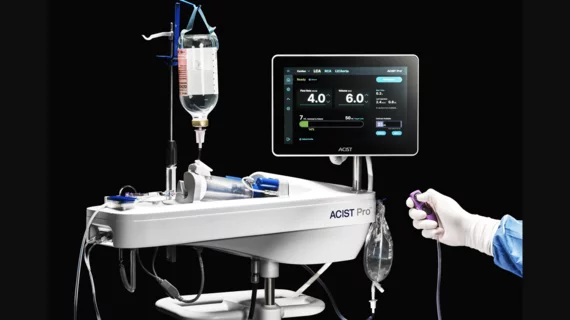
Andriy Vengrenyuk, MS, senior data analyst for interventional cardiology at the Icahn School of Medicine at Mount Sinai, explains a pilot program where artificial intelligence (AI) virtual agents call patients prior to their cath lab procedures to save nursing staff time doing administrative tasks.

AI agent calling cath lab patients to help them prepare for treatment

Mount Sinai Hospital in New York is now using AI-powered virtual agents to call some patients before cath lab procedures. The move was designed to help nurses focus more on patient care and reduce their risk of burnout.

Sunil Rao, MD, director, interventional cardiology, cardiac catheterization laboratory, NYU Langone Heart, professor, Department of Medicine, the Leon H. Charney Division of Cardiology, NYU Grossman School of Medicine, discusses the heart team approach in the context to determining what is best for the patient in terms of bypass surgery or percutaneous coronary intervention.

Heart teams playing a major role in coronary revascularization decisions

Sunil Rao, MD, discusses the heart team approach in the context of deciding what is best for the patient between bypass surgery and percutaneous coronary intervention.

 Hospital patient bays recovery Banner Health and Atlas Ambulatory Surgical Center (ASC) in Sun City, Arizona.

Office-based interventional labs see boost in pay in 2026

CMS has made it a priority to increase payments for procedures performed by office-based labs and ambulatory surgical centers. This was reflected in policy changes made as part of the 2026 Medicare Physicians Fee Schedule.

Sunil Rao, MD, MSCAI, director, interventional cardiology, cardiac catheterization laboratory, NYU Langone Heart, professor, Department of Medicine, the Leon H. Charney Division of Cardiology, NYU Grossman School of Medicine, explains the prevalence, trends and predictors of same day discharge after percutaneous coronary intervention (PCI) data for non-ST-elevation acute coronary syndrome (NSTE-ACS) in clinical practice from the NCDR-CathPCI Registry.

Same-day discharge after PCI for NSTE-ACS is on the rise

Sunil Rao, MD, told Cardiovascular Business that same-day discharge is still relatively rare for these patients, but it appears to be growing more common over time. The COVID-19 pandemic appears to have played a key role in the development of this trend.

Nick West, MD, chief medical officer, Shockwave Medical, Johnson and Johnson Meditech, explains how the company is innovating intravascular lithotripsy (IVL) therapy devices and building clinical evidence from trials for its use in a variety of calcified lesions. There are several companies developing IVL therapy, but West says Shockwave will remain the market leader because of its nearly decade long head start in the market, strong clinical evidence and has about a 10% market penetration. #IVKL

Why Shockwave Medical is so excited about the future of intravascular lithotripsy

Nick West, MD, Shockwave Medical's chief medical officer, detailed how the company is continuing to push IVL technologies forward. "We are leading the space ... we have no intention of giving up that position," he said.