A new use for IVL: helping cardiologists secure transcarotid access for TAVR

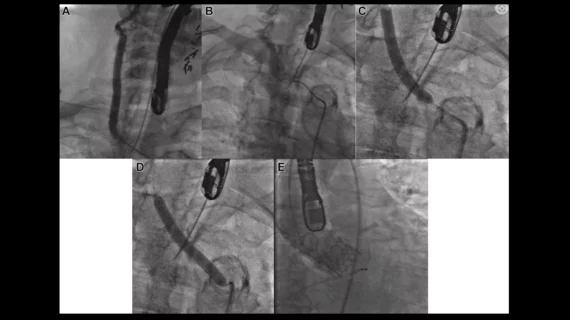
Intravascular lithotripsy IVL carotid artery TAVR. (A) Invasive angiography of the right common carotid artery. (B) Invasive angiography of the brachiocephalic artery (note the heavily calcified aortic arch). (C and D) Intravascular lithotripsy (IVL) treatment of the brachiocephalic artery to the mid common carotid artery using a 7.0 × 60 mm × 135 cm Shockwave IVL balloon. (E) Successful deployment of a 23 mm SAPIEN 3 Ultra 9750 TFX Aortic Valve. Images courtesy of JACC: Case Reports

(A) Invasive angiography of the right common carotid artery. (B) Invasive angiography of the brachiocephalic artery (note the heavily calcified aortic arch). (C and D) Intravascular lithotripsy (IVL) treatment of the brachiocephalic artery to the mid common carotid artery using a 7 × 60 mm × 135 cm Shockwave IVL balloon. (E) Successful deployment of a 23 mm Sapien 3 Ultra 9750 TFX Aortic Valve. Images and caption courtesy of JACC: Case Reports and the American College of Cardiology.

IVL can do more than help prep patients for PCI. In fact, one heart team used Shockwave Medical's IVL technology to secure access for a high-risk TAVR patient.