The FDA has approved a firmware update aimed at addressing two previously reported issues with some of Abbott’s implantable cardioverter defibrillators (ICDs) and cardiac resynchronization therapy defibrillators (CRT-Ds).
Machine learning might be the next step in predicting patient wait times and appointment delays—factors crucial to healthcare’s quadruple aim and its emphasis on quality of care—in radiology practices, researchers have reported in the Journal of the American College of Radiology.
Cincinnati-based TriHealth announced a $10 million investment to adopt IBM Watson’s Health Enterprise Imaging Portfolio, reports the Cincinnati Business Courier.
A group of Dutch researchers found a general practitioner’s MRI referral for patients with traumatic knee symptoms led to increased healthcare costs without any improvement in outcomes, according to a study published in Radiology.
A state board in Illinois has recommended voiding a seven-year, $62 million contract for Epic to implement a new electronic health record (EHR) system at University of Illinois Hospital and Health Sciences System in Chicago, finding some merit to Cerner’s claims that there was conflict of interest with the firm hired to evaluate the bids.
Thanks to contributions from more than 400 donors and support from the Ascension Wisconsin health system, Ascension St. Michael’s Hospital in Stevens Point, Wisconsin, will be opening a new Breast Care Center later this year.
Nearly one in 10 patients who receive percutaneous coronary intervention (PCI) end up back in the hospital with an unplanned readmission within 30 days, according to a study published online April 2 in JACC: Cardiovascular Interventions. These readmissions are usually for noncardiac causes and heavily linked to a patient’s comorbidities and place of discharge, the researchers found.
The latest sentinel event alert from the Joint Commission said healthcare workers and organizations need to do better on reporting—and preventing—workplace violence, including verbal abuse that physicians and nurses too often too often dismiss as “part of the job.”
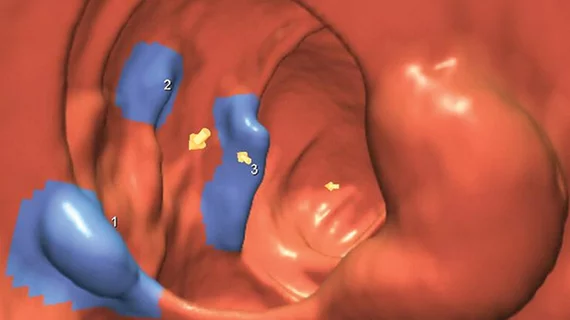
CT colonography (CTC) is an effective, efficient test for senior-age patients with and without symptoms of colorectal cancer (CRC), according to a new study published in the American Journal of Roentgenology.
Scientists at Cedars-Sinai have recreated neurons in a dish to better analyze the brain’s role in obesity and to improve the development of personalized treatment. Findings were published in Cell Stem Cell.